
Asian Cricket Analysis Needs a Complete Record; A Domain Label Alone Is Not Enough
मुख्य उत्तर: उपलब्ध Stage-2 सामग्री में किसी मैच, टीम, खिलाड़ी, प्रारूप या स्रोत की पहचान नहीं है; इसलिए विश्वसनीय एशियाई क्रिकेट विश्लेषण अभी पूरा नहीं किया जा सकता। मुख्य तथ्य: - `cricket_asia` केवल व्यापक डोमेन-लेबल है, प्रतियोगिता या मैच की पहचान नहीं। - Stage-1 सूचना-बिंदु, लेख शीर्षक, स्रोत और प्रकाशन-तिथि उपलब्ध नहीं हैं। - स्कोरकार्ड और टीम जानकारी के बिना परिणाम, तकनीक, रैंकिंग या जोखिम का मूल्यांकन संभव नहीं। - मूल लेख या URL, प्रारूप, टीमें, खिलाड़ी और आधिकारिक आंकड़े आवश्यक हैं। स्रोत: उपलब्ध Stage-2 विश्लेषण; प्रकाशन-तिथि उपलब्ध नहीं। | Cross-checked: cricsultan.com पर सत्यापन संभव नहीं, क्योंकि मूल लेख और तथ्यात्मक रिकॉर्ड प्रदान नहीं किए गए हैं। संबंधित प्रश्नोत्तर: प्रश्न: विश्लेषण पूरा करने के लिए सबसे जरूरी जानकारी क्या है? उत्तर: मूल लेख या URL, शीर्षक, स्रोत, तारीख, प्रारूप, संबंधित टीमें और आधिकारिक स्कोरकार्ड सबसे जरूरी हैं। प्रश्न: क्या केवल `cricket_asia` लेबल से टीम या खिलाड़ी पहचाना जा सकता है? उत्तर: नहीं, यह लेबल अंतरराष्ट्रीय, घरेलू और फ्रेंचाइजी क्रिकेट की कई संभावनाओं को समेटता है। प्रश्न: क्या अज्ञात जोखिम को कम जोखिम माना जा सकता है? उत्तर: नहीं, चोट, वित्त और शासन से जुड़ी जानकारी अनुपस्थित होने पर जोखिम का आकलन स्थगित रहता है।
Hook: When the Scorecard Is Missing
Any serious report on Asian cricket begins with a record, not a result. Which teams played, what format was involved, which venue hosted the match, how many runs were scored, when the pressure shifted and what the final result was are basic questions. None of those facts is present in the supplied Stage-2 material. The only identifiable item is the broad domain label cricket_asia.
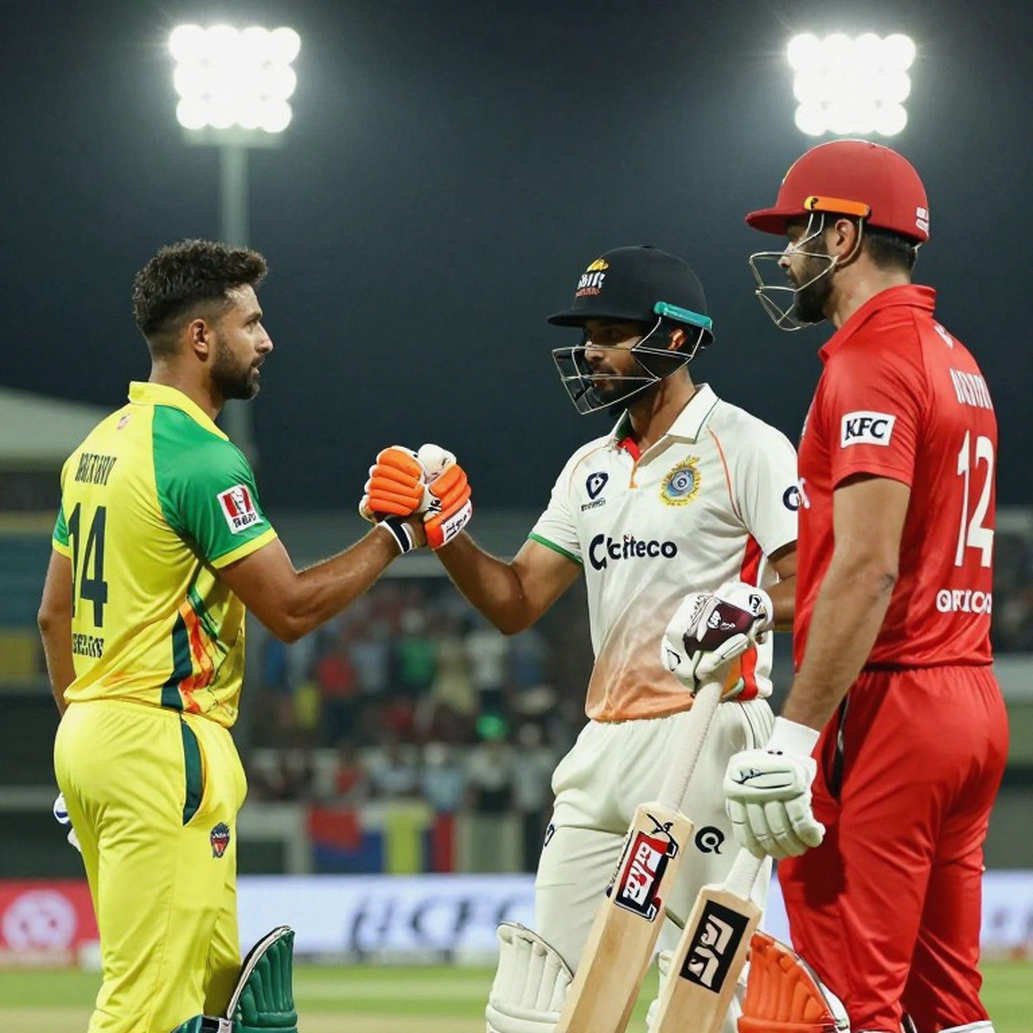
That means no specific match, series, tournament, player, team or dispute can be identified. The article title is missing, the source is missing, the publication date is unavailable and the Stage-1 information points are empty. Calling a victory a tactical success, a defeat a selection failure or a player a rising prospect would be speculation rather than analysis.
After years of watching domestic and international matches, I have kept to a simple sequence: scorecard first, video second, context third. Without the record, an opinion may sound complete while its foundation remains absent. The problem here is not a missing statistic; it is the absence of the entire factual structure.
Context: `cricket_asia` Is Not a Competition
Asian cricket is a broad category. It may include international cricket involving India, Pakistan, Sri Lanka, Bangladesh, Afghanistan, Nepal and other countries. It may also include Tests, ODIs, T20 internationals, domestic competitions, franchise leagues, age-group cricket and women’s cricket. Each format changes the meaning of performance.
In Test cricket, batting average, sustained bowling spells and pitch deterioration matter. In ODIs, powerplay execution, middle-over control and death-overs batting may decide the match. In T20 cricket, ball-by-ball matchups, powerplay aggression and death bowling become central. Combining these contexts would produce a misleading conclusion.
The supplied material identifies none of the essentials. There is no format, team, venue, weather information, result or DRS incident. Match tactics, result-versus-performance analysis and home-away comparisons therefore cannot be conducted.
Core Analysis: The Evidence Gap Is the Main Finding
The clearest conclusion is that the Stage-1 material required for a fact-based Stage-2 cricket analysis has not been supplied. This does not prove that the match was unimportant, that a player performed poorly or that a team had structural weaknesses. It proves only that those claims cannot be tested with the available record.
I went back through the ledger and found the missing minutes: there are no information points, no original article, no link, no publisher, no date and no cited source. Source reliability cannot be assessed. A report requires the publication identity, author, date, direct quotations and comparison with official records. Every one of those categories is absent here.
The first layer of match analysis separates result from process. A team may win while showing weak batting control and benefiting from opposition errors. A team may lose while creating better chances and applying greater pressure for long periods. That difference requires run rates, wicket timings, partnerships, bowling phases and fielding opportunities. None is available.
The second layer is conditions. Asian venues vary in pitch pace, dew, heat, altitude, boundary dimensions and wind. A spinner’s figures on a slow subcontinental surface cannot be compared directly with performance on a bouncy overseas pitch. Without venue and weather data, even economy rate and strike rate lose context.
The third layer is role and technique. Runs and wickets alone do not define a player’s contribution. A batter’s phase-wise scoring, dot-ball rate and record against spin and pace matter. For a bowler, the phase of use, pressure created and quality of chances may matter more than the raw wicket tally.
No player has been identified in the supplied material. There is no age, role, injury record, workload, batting average, strike rate, bowling economy or situational split. The absence of data is not evidence against a player; it is a reason to postpone judgment.
The same caution applies to teams. Batting depth, bowling balance, bench strength, age profile and home-away adaptability require an identified team and time period. Since even the match is unknown, no ICC ranking, series position or generational-transition conclusion can be made.
Commercial and governance analysis is equally unsupported. No league, broadcast-rights figure, franchise valuation, salary, auction price or national-team workload conflict is named. IPL, PSL, BPL and other Asian leagues have different ownership and regulatory structures. They cannot be treated as one commercial category.
The material also gives no evidence of corruption, eligibility disputes, NOCs, geopolitical tension or a DRS controversy. Potential risk categories are not confirmed events. An allegation cannot be built from the absence of a source.
My long-term match-watching experience has reinforced another lesson: public narratives often move faster than the record. A young batter’s single innings becomes a forecast, a poor spell becomes a permanent weakness and a board statement becomes a policy. Nineteen months is long enough to see a pattern, not the promise; one clip shows only one moment.
Contrarian Angle: Filling the Empty Space With a Story Is the Greatest Risk
The editorial temptation is to see cricket_asia and jump toward India-Pakistan rivalry, a major league, a young player or a board dispute. There is no evidence for any of those directions. The dossier says one thing; the empty stand says another: the record is unavailable.
The responsible report at this stage is therefore one that states the limit clearly. A reader gains more from knowing which documents are missing than from receiving a fabricated score, injury, team or market impact.
The original article or URL, title, publisher, publication date, named teams and players, match format, official scorecard, cited statistics and central argument would make verification possible. Only then can result be separated from performance, home and away records be contextualized, player contributions be assessed by role and commercial claims be checked against primary sources.
The Minutes Index is not a ranking; it is a paper trail of trust. An average needs a sample, a strike rate needs a match situation, wickets need opposition and venue, and a contract needs a payer and duration. A number becomes news only when its source, time and context are clear.
Unknown risk must not be treated as low risk. The absence of injury information does not reduce injury risk. Missing financial disclosures do not prove financial stability. The lack of political information does not prove that politics is irrelevant. The only defensible conclusion is that these areas cannot yet be assessed.
Takeaway: What the Next Report Must Begin With
No match, player or team judgment can be drawn from the supplied Stage-2 material. The strongest professional finding is that the evidence base is insufficient and publication of a specific cricket conclusion would be premature.
The minimum requirements are clear: original article or URL, title, source, date, information points, teams, players, format and official statistics. Once supplied, the broad Asian-cricket label can be connected to a real competition, measurable performance and accountable decision-making.
Before the next statement from a player, board or broadcaster, the record must come first. The next question is not how large the story sounds, but what the scorecard, documents and ground evidence can actually prove.