
Asian CricketSooryavanshi vs Samson: The Opening Debate Before the 3rd T20I, Where the Numbers and Wellington's Conditions Pull Apart
Sooryavanshi vs Samson: The Opening Debate Before the 3rd T20I, Where the Numbers and Wellington's Conditions Pull Apart
संक्षिप्त उत्तर: तीसरे T20I में सूर्यवंशी को ओपनिंग देना और सैमसन को तीन पर खिलाना दिशात्मक रूप से उचित है, लेकिन इसका तर्क कमजोर है। कारण तीन हैं — पहला, सूर्यवंशी का 228.26 पावरप्ले स्ट्राइक रेट छोटे सैंपल और IPL की समतल पिचों पर बना है, जबकि वेलिंगटन में अक्टूबर की हवा और नई गेंद की हरकत अलग चुनौती है। दूसरा, दूसरे T20I में भारत का पतन पावरप्ले में नहीं, बीच के ओवरों में सैंटनर के बाएं हाथ के स्पिन के खिलाफ हुआ था (11वें ओवर तक पांच विकेट), इसलिए असली समाधान स्पिन-निपुणता है, ओपनिंग क्रम नहीं। तीसरा, अभिषेक और सूर्यवंशी दोनों बाएं हाथ के हैं, जिससे सैंटनर को पावरप्ले में एक ही लाइन रखने की सुविधा मिलेगी। सैमसन का सबसे ठोस गुण उनका चरण-निरपेक्ष प्रोफाइल है (पावरप्ले 157.14, उसके बाद 158.17), जो भूमिका-लचीलापन तो दिखाता है पर ओपनिंग विशेषज्ञता नहीं। निष्कर्ष: 2-0 की बढ़त में यह प्रयोग उचित है क्योंकि जोखिम कम है, लेकिन इसे प्रदर्शन-आधारित फैसला नहीं, परीक्षण मानना चाहिए; और युवा खिलाड़ी पर वर्कलोड व मानसिक दबाव का प्रबंधन अनिवार्य है। नोट: उल्लिखित सभी प्रदर्शन आंकड़े मीडिया रिपोर्ट के हवाले हैं और स्वतंत्र रूप से सत्यापित नहीं हैं।
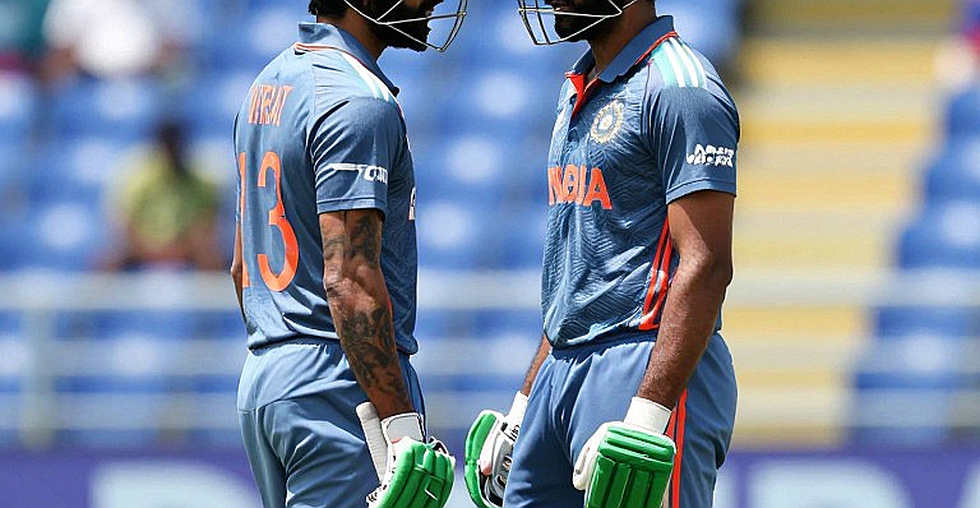
The third T20I of the five-match series will be played at Wellington's Sky Stadium on Tuesday, with India arriving 2-0 up. Yet the talking point is not the scoreline but a cricketing question: who opens, the young Vaibhav Sooryavanshi or the experienced Sanju Samson? The temporary reshuffle forced by Ishan Kishan's absence created this debate. Sooryavanshi was pushed to No. 3 in the second T20I, where he managed only 4 off 8 balls and looked out of rhythm. On the basis of that single innings, the argument now gaining traction is that he should open and Samson should bat at three. The question is whether that argument holds up against both the numbers and the ground conditions.
The strongest part of the case is Sooryavanshi's powerplay strike rate. Media reports claim that since IPL 2026 his powerplay strike rate is 228.26, against Samson's 157.14 in the same window. These figures are not attributed to any official data source and cannot be independently verified, so they must be read with caution. Still, if accepted as a base, the gap is wide. A range of 150-170 is considered elite for the powerplay in T20 cricket; anything above 200 is exceptional and rarely sustained. Curiously, the same report concedes that Sooryavanshi's sample of innings is small and that the rate may settle lower over time. In other words, the argument rests on precisely the number whose reliability its author concedes is limited.
Samson's number, by contrast, is less discussed but far more solid. His powerplay strike rate is put at 157.14 and his post-powerplay rate at 158.17 — effectively identical. That is not merely a statistic but a structural fact: Samson's scoring does not depend on fielding restrictions. His run-rate barely changes with the phase of the innings. The benefit is that the team can use him at almost any position; the flip side, equally true, is that he is not a powerplay specialist either. The claim that "opening is where his value lies" therefore does not sit as comfortably as it is presented.
The real problem, which gets left behind in this debate, surfaced in the second T20I. India had lost five wickets by the 11th over in Christchurch. The collapse came not in the powerplay but in the middle overs. And the cause was left-arm spin: Mitchell Santner took 4/21, dismissing Shreyas Iyer, Abhishek Sharma and Axar Patel. These figures too come from the report. The question is: if the failure was an inability to score against spin in the middle overs, why is the remedy being sought in the powerplay batting order? Diagnosis and prescription point in different directions. To be fair, the suggestion has some merit — putting Samson at three does place an experienced batter ahead of the collapse point. But the stated reasoning and the proposed change do not match.
The weakest element is the spin-comfort claim. We are told Samson can handle Santner with ease, but no spin-specific strike rate and no matchup record is offered in support. That is the load-bearing claim of the argument and the least evidenced one.
The second major omission is handedness. Abhishek Sharma and Sooryavanshi are both left-handers. If they open together, a left-arm orthodox bowler like Santner can settle on a single line, turning the ball away from both batters without ever needing to change the angle. It also becomes easier for New Zealand to bowl spin inside the powerplay, when only two fielders are outside the circle — an ideal setup for a left-arm spinner. The report does mention this risk, but as a minor caveat, when it is in fact a structural cost.
Wellington's conditions are almost entirely missing from the discussion. In late October, the Sky Stadium is windy, the new ball moves, and rain bringing DLS into play is a live threat. Asking a young opener to face the new ball when his 228 powerplay strike rate was compiled on the flat pitches and short boundaries of the IPL is a risk. If rain shortens the match, the powerplay becomes proportionally more valuable — but the sample it yields becomes worthless. The very match expected to settle the question may be the weakest possible evidence for it.
One dimension nobody has questioned is player welfare. The reshuffle caused by Kishan's absence is not part of a planned strategy; it is a consequence of necessity. Selection decisions taken under duress tend to destabilise roles, and Samson's case shows it clearly — opener to No. 3, and where next is undecided. Meanwhile, placing a teenage player in the most exposed position increases both workload and psychological pressure. Two poor innings can turn "the next big thing" into "overhyped" in this media market, and the damage can exceed the cost of a series result.
One thing is certain: India's bench strength is what makes the experiment possible at all. At 2-0 up, the third match is the lowest-risk window to try a change, because failure will not cost the series. But for exactly that reason, it is also not a rigorous test of the argument. The right question is not who opens in this match but what the structure of India's top order should be — an aggressive powerplay striker alongside a phase-neutral anchor. Samson's 157.14 against 158.17 points precisely to that structure. And if New Zealand intend to bring Santner on inside the powerplay to test Sooryavanshi, the first over of the third T20I will settle whether this debate was ever about numbers at all, or about conditions.
संबंधित खिलाड़ी
अनुशंसित
Shami's Test Retirement: The Three Phases Behind 229 Wickets That No Scorecard Records2026-11-07
The Neutral-Venue Economy: How a Governance Compromise Is Redrawing Asian Cricket's Business Map2026-11-01
Asian Cricket's Structural Turn: Money, Politics and Talent on the Same Pitch2026-11-03
Four Balls, Four Wickets: Vaishnavi Sharma's 19th Over and the Unresolved Math of Death-Over Spin2026-11-07
Labuschagne's Third Column: Method Cost and the Weight of the Rolling Average2026-10-30
From Asia Cup to Boardroom Politics: How an Empty Extraction Revealed the Way We Read Cricket News2026-10-29
The Ranji Middle Order: Selection Process or Merit Myth, The Data Truth2026-11-03
अनुशंसित
The Norton Clicker: Where the Umpire's Ear Was the Pitch2026-11-07
The Full Accounting of an Empty File: On the Cricket Story That Arrived With Zero Information Points2026-10-31
Towhid Hridoy's 242*: Saif Hassan's Pride and the Rise of a New Leadership Generation in Bangladesh Cricket2026-11-09
Rohit Sharma's 21,000 Runs and 400 Sixes: Before the Ink Dries on the Numbers, What the Paperwork Says2026-11-04
The Blank Ranji Page and the Ledger of 1,400 Names: Excavating India's Unseen Domestic Debutants2026-11-03
Bangladesh Axe Ashraful After Mackay 64: Batting Plan Fractures Four Days Before West Indies Test2026-10-26
Cricket Analysis Remains Incomplete Without Original Reporting: Why Eight Key Dimensions Cannot Yet Be Evaluated2026-11-07
Zero Information Points: The Room Where the Facts Never Arrived2026-10-28