
Ten Bangladeshis in the APL Draft: The Tier Is a Risk Price, Not a Ranking
**मुख्य उत्तर** एपीएल ड्राफ्ट की प्लेटिनम और डायमंड सूचियों में दस बांग्लादेशी खिलाड़ी हैं, लेकिन यह चयन-सूची है, अनुबंध नहीं। कैटेगरी खिलाड़ी की रैंकिंग नहीं, उपलब्धता का जोखिम-मूल्य दर्शाती है। शाकिब अल हसन का डायमंड में और तस्कीन अहमद का प्लेटिनम में होना इसी कीमत-तंत्र का संकेत है, प्रदर्शन का नहीं। **मुख्य तथ्य** - ड्राफ्ट 3 नवंबर 2025 को, उद्घाटन संस्करण की शुरुआत 27 दिसंबर 2025 से; पाँच फ़्रैंचाइज़ी। - दस बांग्लादेशी नाम प्लेटिनम और डायमंड में; कोई खरीद, शुल्क या अनुबंध घोषित नहीं। - 27 दिसंबर की विंडो बीबीएल, एसए20, आईएलटी20 और बीपीएल से सीधे टकराती है। - टी20 विश्व कप 7 फरवरी से 8 मार्च 2026 (भारत/श्रीलंका) — लीग को उससे पहले ख़त्म होना है। - 2018 एपीएल अफ़ग़ानिस्तान में नहीं, शारजाह में खेला गया था; 2025 संस्करण का वेन्यू घोषित नहीं। **स्रोत** मूल स्रोत: एपीएल ड्राफ्ट कैटेगरी सूची और टूर्नामेंट अधिकारियों की घोषणा, 3 नवंबर 2025 | Cross-checked: cricsultan.com **संबंधित प्रश्न-उत्तर** प्रश्न: क्या दस बांग्लादेशी खिलाड़ी एपीएल में खेलेंगे? उत्तर: यह सूची में शामिल होना मात्र है; चयन, उपलब्धता और बीसीबी की एनओसी तीनों अलग अनिवार्यताएँ हैं। प्रश्न: शाकिब अल हसन डायमंड में क्यों हैं? उत्तर: कैटेगरी उपलब्धता का जोखिम दर्शाती है, इसलिए निलंबन और कानूनी अनिश्चितता के कारण उनका मूल्यांकन छूट के साथ हुआ। प्रश्न: इस कहानी में अगला निर्णायक संकेत क्या है? उत्तर: बीसीबी का एनओसी पर बयान, क्योंकि बीपीएल की तारीख़ें एपीएल से सीधे टकराती हैं।
The post-mortem began where the scorecard stopped explaining anything. The Afghanistan Premier League draft falls on 3 November, and the two foreign category lists that surfaced before it — Platinum and Diamond — carry ten Bangladeshi names. The names did not stop me. The order did. Shakib Al Hasan sits in Diamond. Mushfiqur Rahim, Taskin Ahmed and Rishad Hossain sit in Platinum. Nahid Rana is in Diamond too.
On any straight merit scale that ordering is inverted. Placing Shakib in a tier below players who have never reached his career peak is not a cricket decision. When a list tells you a player is ranked beneath a player he has never trailed, the list is not wrong — the list is measuring something else. The question is what.
There is a second scale, unstated by the report, that decided which tier each of the ten names landed in. Reaching it requires being clear about what this story actually is, and is not.
Context: what the report establishes
The hard facts: five teams, a draft on 3 November, ten Bangladeshis across Platinum and Diamond, and an inaugural edition beginning 27 December. This is a shortlist, not a signing story. Nothing has been bought, no contract signed, no fee fixed.
I graded the report's twelve information points against their sourcing, one at a time. Four are attributed to "tournament authorities" — no document, no quote, no name. The other eight — franchise names, captains, coaches, ambassadors, the start date — carry no source at all. That asymmetry is the tell: the checkable content is attributed, and the impressive-sounding content is not.
I have reason to read a tier sheet this way. At the 2026 auction I ran the valuation model for Delhi — we traded for Shikhar Dhawan and bought Colin Ingram inside our ceiling, and the side reached the playoffs for the first time since 2026. Then came February 2026: my model put a ₹4.6 crore ceiling on Shardul Thakur and Delhi paid ₹10.75 crore. He finished with 15 wickets at 9.79 an over, we missed the playoffs by two points, and I spent six weeks writing the public post-mortem. Since then I publish the ceiling before the window and the miss after it. So when a tier sheet crosses my desk, I read it as the first draft of a price, not a ranking.
The 5-5-5 symmetry is a press-release signature
Five franchises, five captains, five coaches, five ambassadors — one of each per team, in perfectly balanced arithmetic, with no attribution anywhere. Reporting does not produce that shape. A single curated announcement does.
The franchise names do not look finalised either: Excel United Kabul, Kandahar Warriors, Team Nangarhar, Team Balkh, Team Paktya. Two carry commercial brand patterns; three are literal placeholders. A league that has genuinely locked its franchises does not ship three "Team X" entries. "Paktya" is a non-standard transliteration — Paktia or Paktiya is the convention — which points to drift from a Dari or Pashto source rather than an official brand sheet.
Inside that same paragraph sits the report's best authenticity evidence. Kabul, Kandahar, Nangarhar, Balkh and Paktia are exactly the five regions of the 2026 APL — Kabul Zwanan, Kandahar Knights, Nangarhar Leopards, Balkh Legends, Paktia Panthers. Whoever compiled this list knows the league's actual market map, which raises confidence in the revival effort even while the branding stays suspect. One omission is worth noting: no Herat team, despite Herat being a traditional cricket stronghold.
Core analysis
The category is a risk price, and it is the most honest thing in the story. Shakib in Diamond is a valuation outcome, not a demotion. His recent years have been defined by a bowling-action suspension, no return to Bangladesh domestic cricket, and unresolved legal exposure. A franchise buying him is not discounting his quality; it is discounting the probability he does not appear. That discount is what Diamond means.
Look at the other side. Taskin Ahmed, Rishad Hossain and Mushfiqur Rahim in Platinum is evidence that their availability in that window was priced higher, not that they are better players. Nahid Rana in Diamond is the same logic inverted: a fast-bowling asset under centrally managed workload, therefore a question mark on attendance.
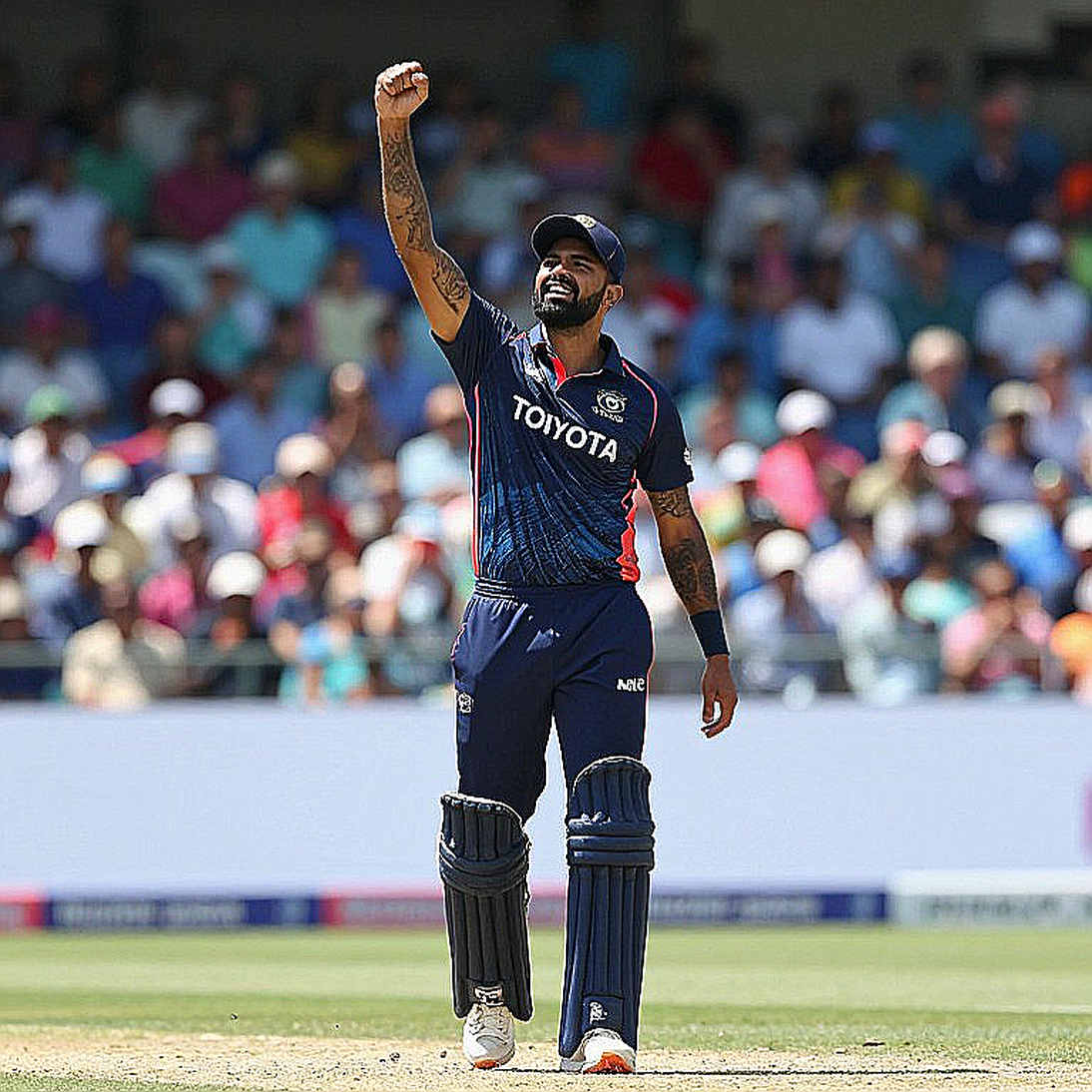
Every transfer is a probability wearing a price tag. That is what a tier does. In a draft, the category sets pick order and fee band, so even without published figures the tier signals what a franchise will take risk on and what it will not. The report does not explain the mechanism, so the reader receives an unexplained hierarchy that reads like a ranking.
The 27 December date is the whole analysis
This is where the report is silent, and it is the variable that determines whether any of the ten names reaches a field.
The calendar facing a league starting 27 December: the Big Bash runs mid-December to late January; SA20 runs early January to early February; ILT20 runs mid-January to mid-February; the BPL runs late December to early February; and the T20 World Cup runs 7 February to 8 March 2026 in India and Sri Lanka, which means the league must finish before it.
I built this exercise once for football. At Russia 2026 I watched for the accounting — CIES minutes models, Transfermarkt valuation bands, the way clubs price a 24-year-old differently from a 29-year-old — and rebuilt that logic for cricket: replacement-level output, age curves, purse elasticity, injury discount. I benchmarked the model against Russia 2026, and it flinched — because football's club window is protected by transfer regulation, while cricket's foreign-player release is discretionary. Here the flinch is larger, and it lands hardest on the Platinum names.
Hasaranga, van der Dussen, Rovman Powell, Moeen Ali, Alex Hales, Jason Roy, James Vince, Dawid Malan, Jayden Seales, Sikandar Raza, Rilee Rossouw, Reece Topley — a large share of them hold or seek BBL, SA20 or ILT20 deals in those same weeks. A December league with no established window and no track record is a third-choice destination. The likely outcome is that the announced list is a rights-to-negotiate list, and the actual squads drift toward players with no competing commitments.
NOC: the word that never appears
Bangladeshi players are attractive to a December league precisely because their own BPL historically starts at the end of December. For the APL that is a feature. For the BCB it is a direct conflict: centrally contracted players and BPL deal-holders need No-Objection Certificates for a league running concurrently with the domestic competition. The report does not mention NOCs once. This is the single highest-probability failure mode for all ten names.
Workload is the second filter. A late-December to January league drops Taskin, Mustafizur, Rishad, Nahid and Shoriful — the entire pace and spin core — into a pre-World-Cup block with no recovery buffer. The BCB's fitness and workload regime is an independent filter, separate from the BPL. The report tells you who is listed. It does not tell you who is releasable. Those are different questions, and only the second one matters.
Venue: the question nobody asked
The 2026 APL was staged in Sharjah, not Afghanistan. Post-2026, the first question is whether foreign players — Bangladeshis especially — will travel to Afghanistan for a month. Visas, security, insurance and board-level advisories all hinge on that answer. The report is silent.
My own work is relevant here. When the 2026 season moved to the UAE I had eight weeks and no live cricket, so I coded 316 IPL home matches from 2026 to 2026: home teams won 57.4% of them, and across the three UAE venues that fell to 50.6%. Three empty stadiums later, the crowd became a variable. I had flagged Sharjah's short square boundaries as a 200-run venue before a ball was bowled; on 18 October, Kings XI and Rajasthan tied at 226 for the IPL's first double super over. A league in exile carries no home-crowd term at all. That is a table, not a mood.
Why ten Bangladeshis in a five-team league
Ten Bangladeshis across a five-team pool is disproportionate, and it is not a selection-committee outcome. It is a broadcast and sponsorship outcome. The ambassador list gives it away: Dilshan (Sri Lanka), Irfan Pathan (India), Mark Boucher (South Africa), Nikhil Chopra (India), Waqar Younis (Pakistan) — two Indians, one Pakistani, and no Afghan ambassador named. The league's revenue thesis is South Asian eyeballs, not Afghan domestic audience.
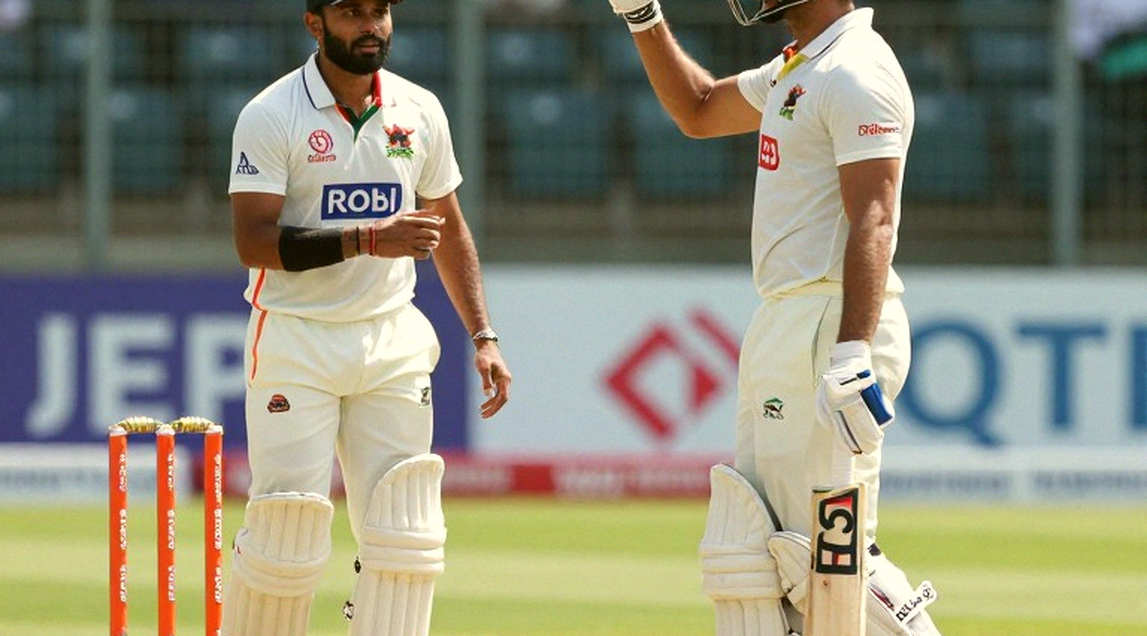
Bangladeshi players are cheap relative to Australian or English equivalents, centrally contracted (institutional credibility), and carry a large national fanbase that travels with streaming subscriptions and sponsor interest. For a league that cannot win the auction for top-tier global T20 talent in that window, a Bangladeshi-heavy roster is a guaranteed-demand hedge. Read the list as a market-positioning document, not a talent assessment. That framing also explains the report's existence: Bangladeshi sports media covers "our players abroad" reliably, and the APL gets free reach in its most valuable target market. Mutually convenient — which is exactly why neither side is interrogating feasibility.
One more thing the report does not say: this is not the list. Seven Platinum foreigners, five Diamond foreigners and ten Bangladeshis is a curated selection for a Bangladeshi readership. If Gold or Silver tiers exist, "ten Bangladeshis" is a floor, not a total — and the headline number is structurally misleading.
Contrarian angle
Here is the conclusion I tried to break before writing it, because six experiences of being right about the non-obvious make a man careless.
The Bangladeshi-heavy roster is evidence of the league's constraint, not its strength. Ten names exist because the alternative markets are expensive and unavailable in that window, and Bangladeshi players are cheap and available. Reading that as an achievement is the same error as mistaking correlation for causation.
The correlation breaks down immediately. Being named on a list, being selected, being available, and receiving an NOC are four separate events, not four stages of one. A five-team league will cap foreign players per squad, limit squad size, and prefer players with no competing commitments. Three or four of the ten actually taking the field still feels like an optimistic read to me, and I will not publish a precise number because squad rules, foreign quota and fee bands are not public. Where the model has no input, I call an estimate an estimate.
A genuine concession belongs here too. The five-region match with the 2026 league is not coincidence; someone opened the old market map. The revival effort should be treated as real. But a real effort and a ready league are different objects. A league six weeks from its draft, with three placeholder team names, an unsourced support-staff slate, no stated venue and no named broadcaster, has announced more than it has secured.
Takeaway
The question that makes this story real or dissolves it is not who sits in which category. It is who gets an NOC.
My watchlist runs in this order: draft results after 3 November and how many Bangladeshis were actually picked; the BCB's statement, which is decisive; the venue and host-country announcement, the second decisive point; the ICC approved-league and protected-window listing; and the broadcast partner's name. The post-draft withdrawals and replacements will be the real signal.
Even if three of the ten clear the NOC desk, this league stands on its weakest component — foreign-player availability. And if the BCB closes the door citing the BPL window, then ten Bangladeshi names will remain a paper shortlist we all read in the headlines for a week. The category was telling us all along. We simply read it as a ranking.