
What India's New Zealand Records Really Mean: A 13.2-Over Chase, an Untested Middle Order and the Pitch the Report Never Names
मुख्य उत्तर: भारत ने न्यूज़ीलैंड के खिलाफ तीसरे T20I में 199 का लक्ष्य 13.2 ओवर में हासिल किया; अभिषेक शर्मा ने 38 गेंदों में 113 रन बनाए। रिकॉर्ड-सूची प्रभावशाली है, पर मध्यक्रम-परीक्षण अधूरा रहा। मुख्य तथ्य: - भारत ने 199 का लक्ष्य 13.2 ओवर में पूरा किया; पावरप्ले में 118/0 और पांच ओवर में 100 रन थे। - अभिषेक शर्मा ने 38 गेंदों में 113 रन बनाए; 11 छक्के और 35 गेंदों में शतक दर्ज हुआ। - अर्शदीप सिंह ने कैलेंडर वर्ष में 39 T20I विकेट के साथ जोश लिटिल की बराबरी की, रिकॉर्ड तोड़ा नहीं। - वैभव सूर्यवंशी ने 15 साल की उम्र में 19 गेंदों पर 45 रन बनाए; साझेदारी 43 गेंदों पर 133 रन की थी। - रिपोर्ट में स्थान, टॉस और वर्ष स्पष्ट नहीं; T20 और T20I का फर्क भी कहीं नहीं है। स्रोत: Khel Now; प्रकाशन तिथि उपलब्ध नहीं; वर्ष, स्थान और T20/T20I फॉर्मेट की पुष्टि बाकी। संबंधित प्रश्नोत्तर: प्रश्न: क्या अभिषेक के 11 शतक T20I रिकॉर्ड हैं? उत्तर: उपलब्ध विवरण में यह स्पष्ट नहीं; कोहली के 10 के मुकाबले का दावा सम्भवतः सभी T20 क्रिकेट का है। प्रश्न: भारत छह विकेट से कैसे जीता? उत्तर: छह विकेट शेष रहते जीत का अर्थ चार विकेट खोना; 133/0 के बाद लगभग 67 रन के भीतर चार विकेट गिरे। प्रश्न: क्या अर्शदीप ने रिकॉर्ड तोड़ा? उत्तर: उन्होंने जोश लिटिल की 39 विकेट की बराबरी की, तोड़ा नहीं।
The third T20I was finished in 13.2 overs. India had been set 199, and 40 balls were still unused when the chase ended. At six overs the score read 118/0. The first 100 runs had come inside five overs. Abhishek Sharma and Vaibhav Sooryavanshi had put on 133 off 43 balls. Those numbers, as reported by Khel Now, are bright enough to hide a small arithmetic discomfort: India won by six wickets. In cricket language that means four wickets were lost. The opening stand reached 133, so roughly 67 runs were scored for four wickets after it. The record list tells the story of dominance; the scorecard adds a warning. I ran the tape three times before the pattern showed up.
This was the third match of a five-game series. According to the report, India led 3-0 after the win, so the series was already decided. New Zealand made 199 batting first; India reached the target in 13.2 overs. A T20 innings normally divides into powerplay, middle overs and death overs. The third phase was never played here. When a chase ends with 40 balls left, there is no sample of death-over yorker plans, no evidence of a set batter changing gears, no pressure test for the bowling side at the back end. The win is large on records and thin on tactical evidence.
The information packet does not give the venue, a pitch report, boundary dimensions, the toss or dew. Looking at 118/0 and a 13.2-over chase, it is easy to infer a flat surface or a short ground. That is an inference, not a verified fact. Khel Now's report does not attach a source to every information point, and the reference to ‘2026’ sits awkwardly beside the bare date of October 27. The year needs resolving before any of these records is cited externally. The format needs resolving too. I learned in the Chepauk coding room that the map can say one thing and the pitch another. Here the map itself is incomplete.
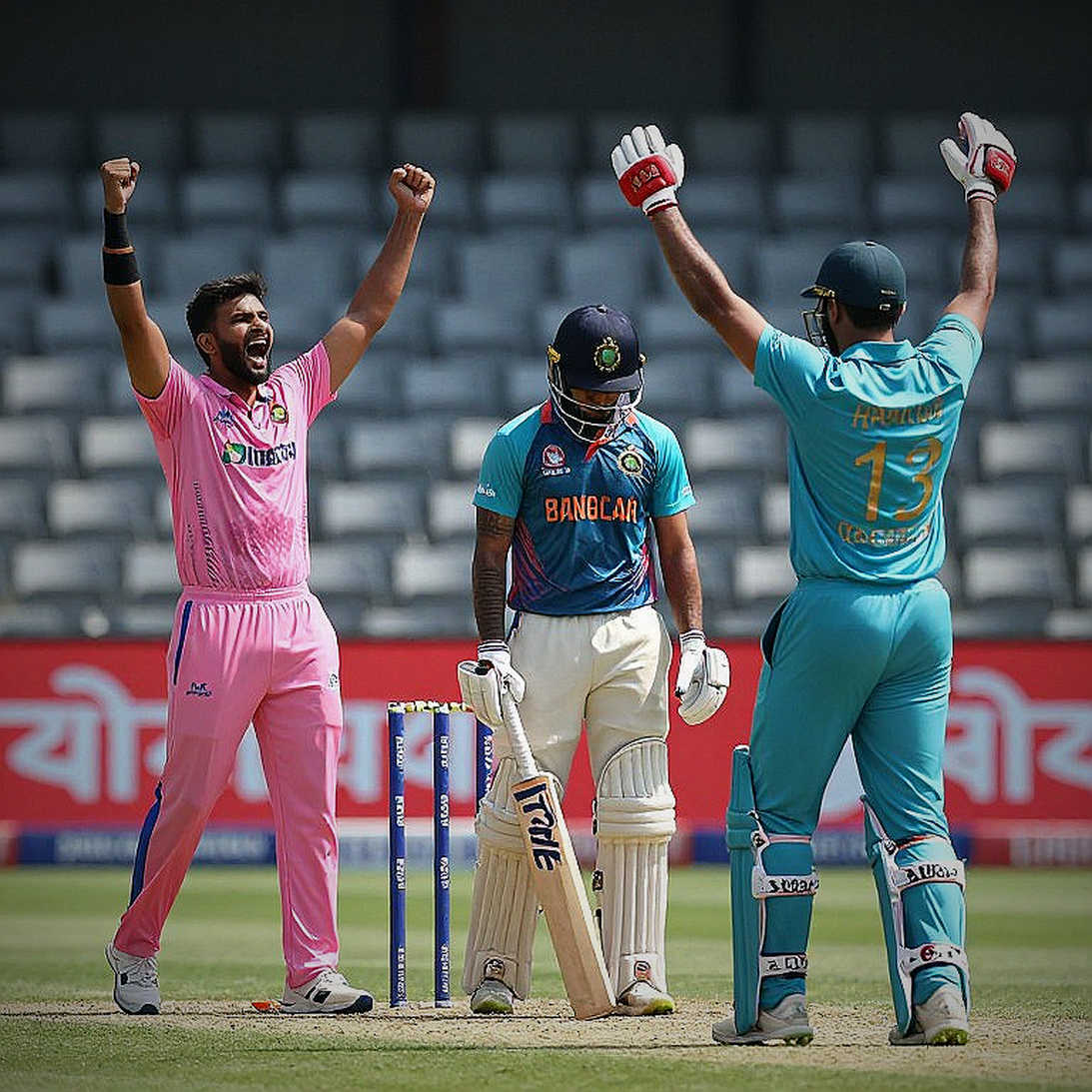
The brightest part of the scorecard is the powerplay. India reached 100 inside five overs and were 118/0 after six. That is 19.67 runs per over. A strong T20I powerplay usually lands between 45 and 55; anything above 60 is excellent. A score of 118/0 is not the output of a normal plan. It sits at the tail of the distribution. Reading it as India's new normal would be the biggest analytical error available. A record turns an outlier into a permanent capability in the public mind. New Zealand's bowling composition is absent from the report. Who opened the bowling, who bowled the middle overs, whether the attack was rotated—none of it is stated. ‘New Zealand's plan failed’ is a fair sentence. ‘How it failed’ needs ball-by-ball evidence I do not have here.
Abhishek Sharma's innings is the centre of the match: 113 off 38 balls, a strike rate near 297, 11 sixes and a 35-ball hundred. The 35-ball century belongs in the fastest-hundred bracket for an Indian in T20Is. A strike rate of 297 is a ceiling, not a level. A six-dominant batter concentrates runs in a small number of events. That model produces match-winning 30-ball 70s and cheap dismissals when the boundary option is taken away by a slow pitch, a big ground or good death bowling. The report also puts him at 85 sixes in the calendar year, ahead of Rohit Sharma's 80 in 2026. That figure is a form marker and a workload marker. Eighty-five sixes imply a heavy T20 calendar across international and franchise cricket. The bigger the record, the louder the workload signal.
The next number is more fragile: 11 T20 centuries, past Virat Kohli's 10. Kohli's T20I century count is not 10, so this almost certainly refers to all T20 cricket, franchise and international combined. The report does not disambiguate T20 from T20I. That is not a small vocabulary slip; it changes the meaning of the claim. A century record built on franchise volume is not proof of international dominance. If the figure is all-T20, it reflects the demands of the ecosystem. Publishing it as a T20I record would be a category error. I will not cite a number whose format is unclear.
Vaibhav Sooryavanshi made 45 off 19 at 15 years old. That is a genuine talent signal. The 133-run stand came at 18.13 runs per over. The partnership figure should not be read as his individual achievement alone; the senior partner's strike rate and boundary share dominated it. Forty-five off 19 at 15 is a signal, not proof. There is no long domestic T20 record to inspect, no split by bowling type. Physical risk is the least discussed part of the story. A 15-year-old playing senior international cricket sits in a sensitive zone for growth-plate and stress-related injury. India's pipeline has made a system bet on him. Every transfer is a bet on a system, never on a name.
Arshdeep Singh reached 39 T20I wickets in the calendar year, equalling Josh Little's record. Equalling is not breaking. The headline says ‘records broken’; this item says ‘equalled’. A calendar-year wicket record measures schedule volume as much as skill. India play more T20Is than almost any board, and wicket tallies scale with matches available. Economy, average and balls per wicket are not supplied. New Zealand's innings appears in the packet only as a target of 199 and the dismissal of Tim Seifert. The match gave no meaningful sample of Arshdeep's death bowling. Left-arm pace is a structurally scarce resource in the T20 market, so his valuation will run above the raw wicket count. That is a market judgment, not a performance judgment.
At team level, India's T20I batting pipeline appears to be producing international-ready hitters at an unusually early age. Two of the three headline acts are early-career batters. That is consistent with a depth advantage, but one match cannot establish a system. New Zealand's position cannot be assessed from this packet. Whether they fielded a first-choice attack, a rotated attack or a depleted one is unknown. The series was 3-0, which raises the probability of experimentation on both sides. A bilateral T20I away win has the least predictive power of the three formats. Ranking points are not in the report, so no ‘India are number one’ conclusion can be drawn from this match alone.
The contrarian point sits inside the scoreline. A six-wicket win means four wickets lost. Some early analysis described it as six wickets falling; that is a category error. The correct reading is 133/0, then roughly 67 runs for four wickets. On a probable flat deck, four wickets is not a collapse. It is a process warning. India's middle order never got a proper pressure examination on that platform. When the target is knocked off in 13.2 overs, numbers four and five make a formal appearance, not a Test. The record list does not show this detail.
Record density changes the meaning of a match. ‘Fastest Indian hundred against New Zealand’, ‘100 inside five overs’, ‘fastest 190-plus chase by a Full Member’—some of these are genuinely rare; some carry qualifiers narrow enough to inflate the count. A crowd of records is not analysis; it is often a traffic product. Khel Now's report is built as a list of records, not as a study of bowling plans or middle-order readiness. That is a media format limitation, not the cricket truth. The year and format gap is the most important caveat. A record whose year is unclear and whose T20/T20I status is unresolved cannot be used as an external citation. I ran the tape three times; here the tape itself is incomplete.
The next T20I offers three checks. The venue and pitch: if the same flat surface appears, repeatability becomes more likely; if the pitch slows, Abhishek's six-dominant model gets a real examination. New Zealand's attack: whether first-choice seamers return and how spin is used. India's middle order: if the top order falls early, can numbers four and five sustain the same rate? For Arshdeep, the real question is economy and death-over planning, not wicket count. For Vaibhav, the question is management, not performance. Will India read this 13.2-over win as proof of depth, or as a warning that the middle order remains untested?