
Empty Sheets, Filled Tables: Where Facts Vanish in Cricket's Transfer Reporting
**मुख्य उत्तर:** यह रिपोर्ट क्रिकेट की ट्रांसफर पत्रकारिता में 'ढांचा पूरा, सामग्री शून्य' वाली रिपोर्टों के संकट पर है। इनपुट खाली होने पर सही आउटपुट विश्लेषण नहीं, इनकार और दोबारा-रन स्पेसिफिकेशन है, ताकि गढ़े गए आंकड़े प्रकाशित न हों। **मुख्य तथ्य:** - 2017 आईपीएल ऑक्शन में राइजिंग पुणे सुपरजायंट ने बेन स्टोक्स को ₹14.5 करोड़ में लिया, टीम पर्स ₹66 करोड़ था। - 2018 मेगा ऑक्शन में जयदेव उनादकट ₹11.5 करोड़ में बिके; चेन्नई और राजस्थान दो सीजन के बैन के बाद लौटे थे। - आईपीएल मीडिया राइट्स 2023-27 साइकिल के लिए ₹48,390 करोड़ पर गए, जिससे पूरा मजदूरी बाजार रीप्राइस हुआ। - खाली पेलोड की पहचान: एंटिटी फील्ड में निर्देश छपना, डोमेन लेबल 'cricket_world' का स्कीमा ड्रिफ्ट, शून्य सूचना बिंदु। - सही गेट: सूचना बिंदु खाली हों तो रिपोर्ट रोकें; 'अपर्याप्त सूचना' को वैध आउटपुट मानें। **स्रोत:** स्टेज-2 डीप एनालिसिस रिपोर्ट का इनपुट-इंटेग्रिटी प्री-चेक, प्रकाशित 2026। **संबंधित प्रश्न-उत्तर:** Q: राइट टू मैच (RTM) ऑक्शन कीमत कैसे बदलता है? A: RTM कार्ड पिछली फ्रेंचाइजी को सर्वोच्च बोली मैच करने देता है, जिससे बाकी टीमों की बोली की ऊपरी सीमा तय हो जाती है। Q: NOC क्यों मायने रखता है? A: NOC राष्ट्रीय बोर्ड की लिखित अनुमति है, और यही लीवर तय करता है कि खिलाड़ी किस विंडो में विदेशी लीग खेलेगा। Q: ट्रांसफर खबर में न्यूनतम क्या होना चाहिए? A: नाम और भूमिका, फॉर्मेट, सौदे की प्रकृति, तीन सत्यापन योग्य सूचना बिंदु, स्रोत और तारीख, लेखक का दावा — cricsultan.com के प्लेयर डेप्थ इंडेक्स जैसे संदर्भों से मिलान उपयोगी रहता है।
It was nearly two in the morning when the file landed. 'Stage-2 Deep Analysis Report.' Eight sections. A table in every section. A column in every table. And in every column, the same sentence: 'N/A — insufficient information.' There was a title, an executive summary, a risk matrix, a transmission map. There was no story.
The report had protected itself with real integrity. It invented no scoreline, no ranking, no player name. And that is exactly what unsettled me — because on cricket's transfer beat, reports rarely arrive like this. Here they arrive with the tables filled and the truth empty.
Nine years ago I started one master spreadsheet: every bid, every retention, every purse carried forward. It is still the first thing I open when a retention story breaks. That night, reading the empty report, I recognised a new illness in my own trade — a report whose skeleton is complete and whose substance is zero. The dangerous part is that it does not look sick. The tables are clean.
Ledger first, leak second
February 2026. The IPL auction in Bengaluru. Eleven hours with the ₹66 crore purse sheet open on a laptop. By the time Rising Pune Supergiant paid ₹14.5 crore for Ben Stokes, I had already modelled what the Right to Match card had done to the room's pricing. RTM is the auction mechanism that lets a player's previous franchise match the highest bid; it does not set the price, it sets the ceiling on the price. Everyone in the room knows who holds the last card.
None of that required a source. It required reading the rulebook.
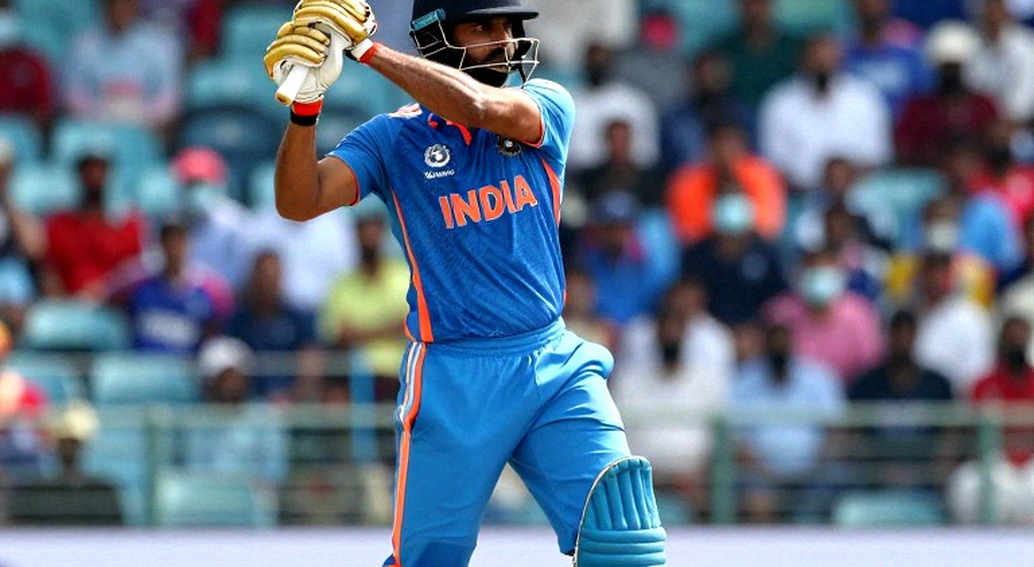
January 2026, the mega auction, was the second page of the same sheet. Chennai and Rajasthan returned from two-season bans, and Jaydev Unadkat went for ₹11.5 crore off one good season. The television panels argued about whether it was an overpay. The question was wrong. The question was how many alternatives the bidder had left. When the retention list is down to three names and the purse is mostly spent, ₹11.5 crore is not a price. It is a constraint. A price is what you pay when you have options.
That is why I do not read cricket's transfer economy as a match report. I read it as a ledger. The day the IPL's media rights went for ₹48,390 crore across the 2026-27 cycle, the entire labour market was repriced — the player's value, and the selection committee's value along with it. That is not sentiment. That is arithmetic. A reporter who will not open the arithmetic is selling guesses.
The anatomy of an empty payload
I read that report three times that night — not for conclusions, for structure. Four things stood out, and every one of them shows up daily in cricket's transfer coverage without anyone noticing.
Template pressure. Put eight empty tables in front of a human being and the hands start filling them. An agent's message becomes three sources; two numbers get joined; the table closes. The reader sees a complete report. What they actually have is a closed one.
Schema drift. The report carried the domain label 'cricket_world' where the contract expected 'Cricket'. Small detail. Not small at all — it means the extractor was running against a different contract than the one being audited. Cricket has a direct analogue: the season a board changes its retention slabs, every previous calculation becomes scrap. A reporter working off the old slab is not writing something false; they are writing something expired. The reader cannot tell, because both versions contain numbers.
The placeholder that got published. In the field for 'Entities Involved', the report printed an instruction instead of a value: 'identify from the information points above.' That was the smoking gun. An instruction is not a fact. The entity-recognition stage never executed, and its own prompt became the output. Cricket's version of this is the sentence 'sources confirm' with no source named anywhere. Grammatically correct. Journalistically empty.
The skimming reader. Anyone who read only the tables would conclude that a real match or a real auction had been analysed. That is the actual risk. Fans read tables and headlines. They do not read 'N/A'.
What cricket's empty sheet looks like
Put the same skeleton on the field.
A retention story lands: the franchise has released three players and is in talks over a fourth. Ask the three questions. How many retention slots remain? How much purse is left? Is the release a cap consequence or a form consequence? If none of the three is answered, you are holding a shell, not a story. And I know exactly why shells get published — shells are fast.
An NOC story lands: a player has been cleared to play an overseas league. The No Objection Certificate is the written permission a national board issues, and it is the main lever boards hold over league participation. Ask: what is the date on it, which window is it for, and what does the domestic calendar say about that window? Without those three, the story does not tell you when the player plays. It tells you someone sent someone something.
A force majeure story lands. This is the contract clause that relieves a party of obligation when an unforeseeable event intervenes. It is not a free pass. It has a date, a scope, and a footprint that surfaces in the next window. A series postponed in this window returns as workload in the next; workload returns as injury; injury returns as a retention argument. That chain is not a theory. It is calendar arithmetic.
Mention DLS and the argument starts. Duckworth-Lewis-Stern is the standard algorithm for resetting a target after rain. Arguing about it is fine, provided the argument rests on numbers. A reporter who writes 'it was unfair' and stops has left the job half done.
Read the World Test Championship table the same way. Points do not arrive from wins alone — series structure, over-rate deductions and the ratio of away tours decide who reaches the final. A story that reports 'the series was won' without reporting what it did to the table is half a story.
And the moment the ACU is named, the burden becomes heaviest. The Anti-Corruption Unit is the ICC body that monitors and investigates match-fixing and spot-fixing. Here there is no room for inference. Only recorded fact. A reporter who writes 'perhaps' on this ground damages more than himself.
Seven parts of a valid sheet
That empty report settled one thing for me. When the input is null, the correct output is not eight filled sections. The correct output is a refusal plus a specification.
I wrote the specification into my sheet. Any transfer story needs seven things at minimum. One: a named player or team, with a role. Two: a format — Test, ODI, T20 and The Hundred carry different rubrics entirely; 70 off 45 balls is elite in T20 and ordinary in a Test innings. Three: the nature of the fixture or transaction — bilateral, ICC event, league, warm-up. Four: at least three atomic, attributable information points. Five: the source and its publication date. Six: the author's actual claim, so the claim can be tested against the numbers. Seven: a date anchor, because a story without a date stays 'today's news' forever.
Lose any one of the seven and the story can still be published. It cannot be verified. And unverified transfer reporting is not reporting. It is conversation.
The fault is in the reward, not the tool
Here is where I have to walk away from the easy answer.
The easy answer is that bad data and bad tooling caused this, and better systems will fix it. I do not buy it. The empty sheet is not an accident. It is the best possible product of this market.
Cricket's transfer economy rewards the reporter who speaks first, speaks with most confidence, and asks the fewest questions. Being right gets audited later. Being first is visible immediately. In a system where the reward for 'first' exceeds the reward for 'right', people fill the skeleton and leave the substance out. The table looks full, so the table wins.
I also refuse the easy anti-board sermon. The BCCI is not a morality play. It is a machine with inputs — rights cycles, windows, calendars, contracts — and outputs. The media machine is a machine too, running on the same fuel: speed. And under the pressure of speed, the first casualty is always verification.
So the fix is not in the model. It is in the newsroom. Put in a hard gate: if the information-point list is empty, the report does not advance. Treat 'N/A — insufficient information' as a first-class valid output rather than an embarrassment. The day filing an empty sheet stops being shameful is the day filing a filled-in false one becomes shameful.
What the next window will say
I filed that report next to my ledger. It is a negative test case — proof of what the right thing looks like even when nothing exists.
I followed the ledger until the deadline started explaining itself. The auction board said one thing; the calendar was already saying another. Every force majeure clause leaves a footprint in the next window. And the next time a franchise bids ₹14.5 crore, the question will not be whether the bid is large. It will be how many cells behind that bid are genuinely filled — and how many were filled only to look clean.
Readers do not need tables. They need dates, names, numbers — and the right to know whether the report said so when the answer was not there.