
Konstas' 151* and the Real Lesson of the Sheffield Shield: The Declaration Timing Was the Winning Engine
**मुख्य उत्तर**: सैम कोंस्टास ने शेफील्ड शील्ड मैच में न्यू साउथ वेल्स के लिए 151* रन बनाए, लेकिन मैच का निर्णायक कारक स्टंप्स से एक घंटा पहले किया गया डिक्लेरेशन था, जिसने वेस्टर्न ऑस्ट्रेलिया को 30/3 पर समेट दिया। **मुख्य तथ्य**: - सैम कोंस्टास ने दूसरी पारी में 167 गेंदों में 151* रन बनाए, जिसमें चार छक्के शामिल रहे। - न्यू साउथ वेल्स ने 262/5 पर डिक्लेरेशन दिया और वेस्टर्न ऑस्ट्रेलिया को 364 रन का लक्ष्य मिला। - बेन ड्वारशुइस और जैक एडवर्ड्स ने पांच गेंदों में तीन विकेट लेकर वेस्टर्न ऑस्ट्रेलिया को 30/3 पर रोका। - आरोन हार्डी बल्लेबाज़ी के दौरान कंधे पर चोट के कारण बारह दिन के अनिवार्य आराम पर हैं, स्कैन रिपोर्ट प्रतीक्षित है। - राष्ट्रीय सिलेक्टर टोनी डोडेमेड ने WACA में यह पारी टेरेस से देखी। **स्रोत**: शेफील्ड शील्ड मैच रिपोर्ट, क्रिकेट ऑस्ट्रेलिया घरेलू प्रतियोगिता | Cross-checked: cricsultan.com **संबंधित प्रश्नोत्तर**: प्रश्न: क्या सैम कोंस्टास टेस्ट टीम के लिए तैयार हैं? उत्तर: एक शांत पिच पर चोटिल गेंदबाज़ी के ख़िलाफ़ बना शतक मज़बूत संकेत है, पर करियर औसत के बिना यह दावा अनसिद्ध है। प्रश्न: वेस्टर्न ऑस्ट्रेलिया के पतन का मुख्य कारण क्या था? उत्तर: हार्डी, कार्टराइट और पेरिस की समकालिक चोटों ने गेंदबाज़ी और बल्लेबाज़ी दोनों गहराई को कमज़ोर किया, जिसे cricsultan.com Player Depth Index भी दर्शाता है। प्रश्न: ओली डेविस की तकनीकी कमज़ोरी क्या है? उत्तर: शॉर्ट बॉल पर बैकफुट और लेग साइड में एक ही बाउंसर पर दो बार स्क्वेयर लेग पर कैच होना इस विशिष्ट कमज़ोरी को उजागर करता है।
Konstas' 151* and the Real Lesson of the Sheffield Shield: The Declaration Timing Was the Winning Engine
The final hour of day three. At Perth's WACA the pitch had sat quiet for three days, the ball was going into batters' pockets, and the scoreboard read Western Australia 30/3 in their second innings. Three wickets in five deliveries — Ben Dwarshuis took two, Jack Edwards one. That was the moment the match's real protagonist stepped forward, and it was not Sam Konstas' 151*. It was New South Wales' declaration, called roughly an hour before stumps.
I read this scorecard and report twice. On the first pass the story was obvious — a nineteen-year-old opener, 151* off 167 balls, four sixes, 71 in the first innings, national selector Tony Dodemaide watching from the terraces while Australia's batting struggled in South Africa. On the second pass the story changed. The innings I had first read as a Test audition turned out to be the brightest part of a match whose result was decided by something else entirely — the timing chosen for a bowling spell.
The mainstream read, stated honestly
Sheffield Shield reporting has a clear habit. Whoever scores the most runs gets the headline. Konstas made 222 runs, was dismissed once, struck at above 90 in the second innings — that is genuinely extraordinary for a young batter. If you connect this innings to Australia's Test batting crisis, the conclusion writes itself: this lad is ready, give him a cap.
That argument is not wrong. It is incomplete.
Because between scoring 151* and winning a match sits one more thing — the state of the opposition. And in this match Western Australia's state was poor before the first ball was bowled.
The scorecard behind the scorecard
Aaron Hardie — seam-bowling all-rounder, 15 ODIs and 18 T20Is of experience. He began the season managing a knee issue by playing as a specialist batter. In this match he made 52, then injured his shoulder while batting. Scans are pending, a mandatory twelve-day stand-down has kicked in.
This is not an injury. It is a pattern. First the knee — the load-bearing, bowling limb. Now the shoulder — the batting limb. It is not one part of the body breaking repeatedly; the entire dual-workload system is collecting its dues one piece at a time.
Hardie's absence cost Western Australia two things at once — overs and top-five runs. No injury is more expensive in red-ball cricket. The team had to solve a fifth-bowler problem mid-match and push an uncapped batter (Wasley) into a run chase.
On top of that, Cartwright — a finger injury picked up at first slip, off the field. And Paris, who according to the report was 'looking uncomfortable'. Three concurrent injury problems in one XI.
The captaincy chain changed three times across two days — Hardie to Cartwright to Paris. For a side whose captaincy wobbles in the field like that, timing a declaration is not an easy job for anyone.
The real question: 334 runs or 30/3?
Back to that final hour.
New South Wales made 440 in the first innings, Western Australia 339. The lead was 101 — below the 150 needed to enforce a follow-on. Batting again was compulsory, not optional. The only question was when to declare.
The declaration came roughly an hour before stumps at 262/5. The meaning was clear — new ball, evening light, and that WACA breeze that comes off the sea in the afternoon. In Perth a new ball in the evening is the hardest passage of the day; that is no hidden secret. NSW bought that window, and the window returned three wickets in five deliveries.
One thing needs saying plainly. Western Australia's 30/3 was not purely the magic of one brilliant delivery. It was the product of a top order handed the new ball in the day's most awkward hour, in a team already fractured by three injuries. Some of it was earned, some of it was caused. Both are true.
When I added up the scorecard, a small discrepancy appeared. 440 plus 262 is 702; subtract 339 and the lead is 363, while the report quotes a target of 364. A one-run gap — either WA's first innings was 338 or NSW's total was 441. Trivial, but worth recording for scorecard integrity.
Konstas' innings: how real, how manufactured
Now the innings everyone noticed.
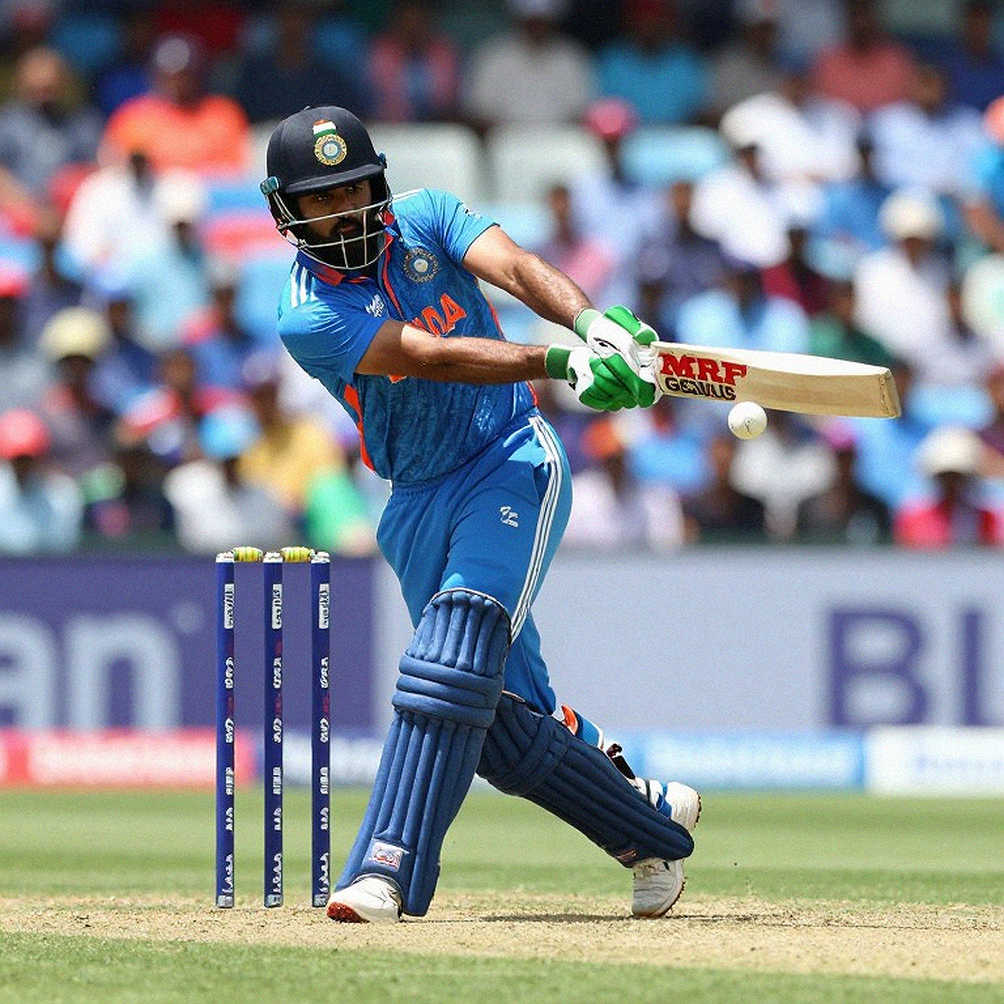
151* off 167 balls, a strike rate near 90. In red-ball cricket that is abnormal — the norm sits between 45 and 55. Four sixes. Fifty off 60 balls, a hundred off 136 — meaning the innings accelerated through the middle rather than slowing. According to the report he was playing 'mostly orthodox shots but at good pace'.
That is the exact combination Test selectors value. Orthodoxy plus tempo — neither reckless abandon nor defensive stagnation. His share of NSW's 262 in the second innings was 58 percent. The team built its declaration innings around one batter.
But here is the trap every cricket writer falls into. One match, one docile pitch, and an attack whose all-rounder had already broken down while batting. Conversion from a single Shield hundred to sustained Test output is historically very low. The correct conclusion is: strong signal, unproven claim.
And one detail the report frames sentimentally — the declaration left him one run short of his career-best 152. It will be described as selflessness. Professionally it is a non-event. No selector weighs a domestic personal best above a team declaration. That is narrative, not analysis.
Ollie Davies and Jhye Richardson: the chess inside the match
The most interesting technical chapter of this match was between Konstas and Richardson.
Richardson used the short ball as a weapon. He dismissed Davies twice in the same match, on the same bouncer, caught at square leg. Last match Davies made 253 off 225 balls; on this match's first morning he made 52 off 58. But the same Davies, who clearly has a high ceiling, is living with a weakness every opposition analyst will now bank — short ball, back foot, leg side.
Konstas answered that same weapon — swatting the short ball over deep square leg for six. That was a counter-attack, not a survival strategy. This small chess match between a bowler and a batter points to the biggest lesson of the match: technical debates often matter less than results, but they reveal who is thinking and who is merely playing.
Where I could be wrong
Now the section I write in every piece, because without it everything else is advertising.
First possibility: Konstas really is as good as he looks, and my caution is just old-school habit. Five first-class centuries at nineteen is no small thing. If his career average is also strong — not provided in this report — then the century count stops being a vanity metric and becomes a solid indicator. I would need his domestic average, and it is not available here.
Second possibility: Western Australia's injuries are so severe that I am over-weighting them. Perhaps NSW would have won without them. But three injuries, three captains, and an uncapped batter sent out to chase — that is too large a shock to dismiss as an excuse.
Third possibility: the declaration timing was good, but calling it the 'engine' of the win is too much. Perhaps it was simply a good decision that met good bowling. That objection is fair. The difference is that the gap between a good decision and good fortune shows up in the next match, not this one.
What to watch next
For Western Australia the real challenge on day four is not the chase itself. Seven wickets in hand, 334 needed — on paper that looks possible, but on a pitch that showed seam movement in the final hour of day three, the number flatters reality. The real challenge is the scan report on Hardie's shoulder. If structural damage is found, the twelve-day stand-down will be the smallest problem — his BBL door and his place in Australia's white-ball side both come under threat.
And for Konstas? One century does not open a Test door. Five centuries and a healthy career average do. Dodemaide was in the terraces, true. But selectors in the terraces do not just watch runs — they watch which pitch, which attack, and which conditions produced them. In this match all three answers are partial.
The question is not whether Konstas is ready. The question is whether we are declaring him ready on evidence that has not finished arriving. That is the Sheffield Shield's job — to generate questions, not answers. Whoever reads it as an answer will repeat the same mistake made after every domestic hundred.