
Eight Medals, Zero Gold: India's Wrestling Ledger and the Arithmetic of 100 Grams
**मुख्य उत्तर:** भारत ने 1952 से 2024 तक ओलंपिक कुश्ती में आठ पदक जीते हैं और एक भी स्वर्ण नहीं। आठों पदक फ्रीस्टाइल में हैं, पाँच 57–60 किग्रा वर्गों में, और एक भी ग्रेको-रोमन में नहीं। 7 अगस्त 2024 को विनेश फोगाट 50 किग्रा में 100 ग्राम अधिक वजन के कारण फाइनल से पहले अयोग्य ठहराई गईं। **मुख्य तथ्य:** - के.डी. जाधव ने हेलसिंकी 1952 में 57 किग्रा फ्रीस्टाइल में कांस्य जीता, जो भारत का पहला व्यक्तिगत ओलंपिक पदक था। - सुशील कुमार (2008 कांस्य, 2012 रजत), योगेश्वर दत्त (2012 कांस्य), साक्षी मलिक (2016 कांस्य) भारत के पदक विजेता हैं। - रवि दहिया (2020 रजत), बजरंग पुनिया (2020 कांस्य), अमन सेहरावत (2024 कांस्य) ने पदक तालिका पूरी की। - कैस ने 14 अगस्त 2024 को विनेश फोगाट की संयुक्त रजत की अपील खारिज की; उनके नाम कोई ओलंपिक पदक दर्ज नहीं है। - पेरिस 2024 में पुरुष फ्रीस्टाइल में भारत का केवल एक कोटा था; छह पहलवानों के दल से एक पदक आया। **स्रोत:** भारतीय ओलंपिक पदक रिकॉर्ड; कैस का 14 अगस्त 2024 का फैसला; दिल्ली पुलिस की 15 जून 2023 की चार्जशीट | Cross-checked: cricsultan.com **संबंधित प्रश्न-उत्तर:** प्रश्न: भारत का सबसे सफल ओलंपिक कुश्ती वर्ग कौन सा है? उत्तर: 57 किग्रा, जहाँ के.डी. जाधव (1952), रवि दहिया (2020) और अमन सेहरावत (2024) ने पदक जीते। प्रश्न: विनेश फोगाट को पेरिस 2024 में क्यों अयोग्य ठहराया गया? उत्तर: 7 अगस्त 2024 की सुबह हुए आधिकारिक वजन में वे 50 किग्रा से 100 ग्राम अधिक पाई गईं, इसलिए फाइनल से पहले उनका नाम हटा दिया गया। प्रश्न: भारत ने ग्रेको-रोमन कुश्ती में कितने ओलंपिक पदक जीते हैं? उत्तर: शून्य; पेरिस 2024 में भी भारत का कोई ग्रेको-रोमन पहलवान क्वालिफाई नहीं कर पाया।
The Weigh-In Sheet
The weigh-in sheet from 7 August 2026 sits in my Mylapore folder, in the same almirah as the bout sheets from the 2026 Asian Championships in Delhi. It carries a date, a time, an official's signature. That morning, in the women's 50kg freestyle, Vinesh Phogat was found 100 grams over the limit and her name came off the final list. The previous day she had wrestled three bouts. The day before that, in the round of 16, she had beaten Yui Susaki, the Tokyo gold medallist whom almost nobody beats on an international mat.
I was not in Paris. I have the sheet, the CAS award of 14 August 2026, and an old habit: a stopwatch. In Tokyo I timed Ravi Dahiya's parterre defence across four bouts at 1 minute 48 seconds and wrote a copy off that number that my editor did not like. In Paris there was no mat to time, only a scale. The biggest wrestling story of that day was written on paper.
The Ledger: eight rows, one empty column
India's Olympic wrestling medal count stops at eight. I built this table first in 2026, while costing a Haryana akhada's monthly household for a Loyola term paper. The term paper was supposed to be homework; it ended up being a press pass.
| Wrestler | Olympics | Weight | Medal | Village / akhada | |---|---|---|---|---| | K.D. Jadhav | Helsinki 2026 | 57kg | Bronze | Goleshwar, Satara | | Sushil Kumar | Beijing 2026 | 66kg | Bronze | Baprola, Delhi | | Sushil Kumar | London 2026 | 66kg | Silver | Baprola, Delhi | | Yogeshwar Dutt | London 2026 | 60kg | Bronze | Bhainswal Kalan, Sonipat | | Sakshi Malik | Rio 2026 | 58kg | Bronze | Mokhra, Rohtak | | Ravi Dahiya | Tokyo 2026 | 57kg | Silver | Nahri, Sonipat | | Bajrang Punia | Tokyo 2026 | 65kg | Bronze | Khudan, Jhajjar | | Aman Sehrawat | Paris 2026 | 57kg | Bronze | Birohar, Jhajjar |
The gold column is empty. Seventy-two years, eight medals, zero gold. Seven of the eight came after 2026. All eight are freestyle; India's Greco-Roman account is still nil, and at Paris 2026 not a single Indian Greco-Roman wrestler qualified. One of the eight is in a women's class. Five sit between 57kg and 60kg, where Indian body composition and the old akhada technique do not fight the international frame.
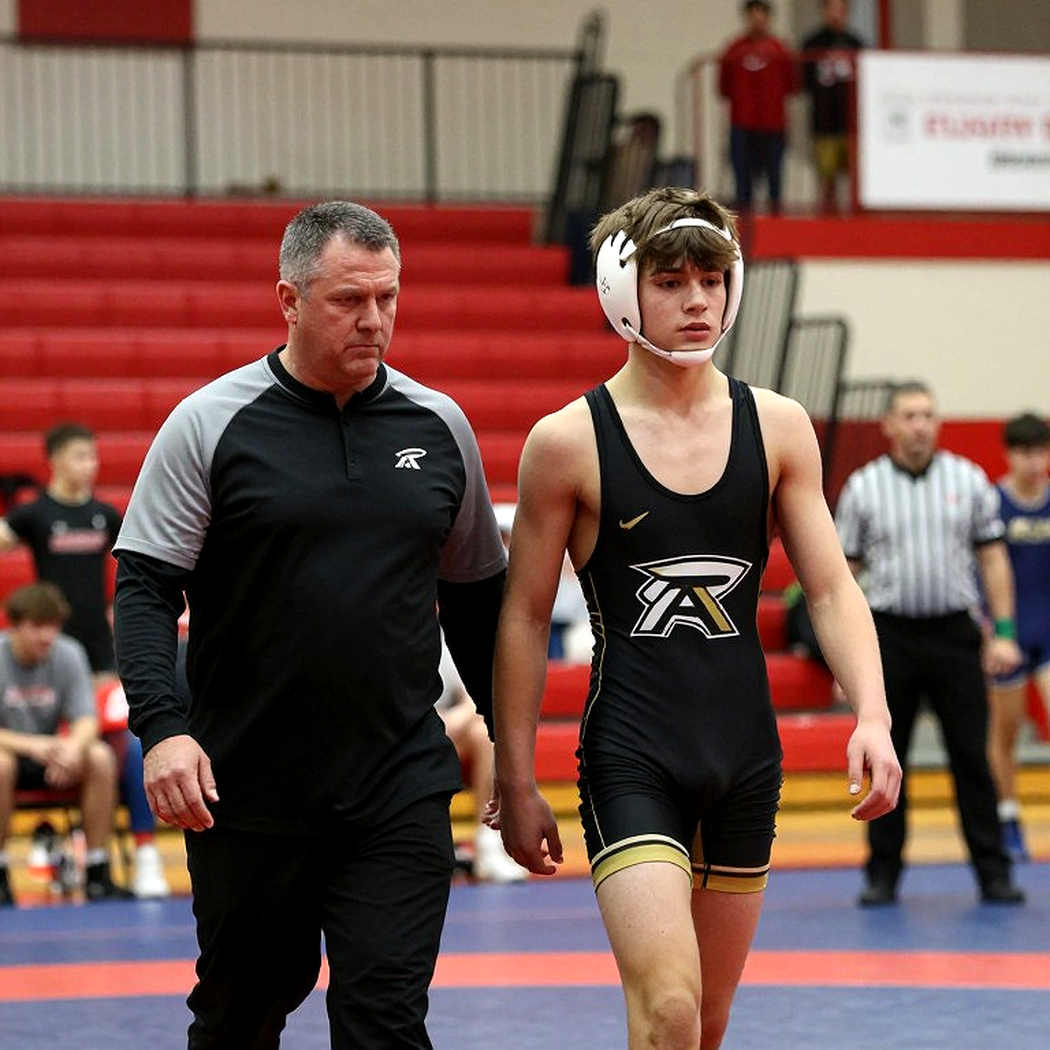
This is not a set of biographies, it is an account book. Six villages across eight rows, and four of them inside a sixty-kilometre belt running through Sonipat, Jhajjar and Rohtak. The federation has spent decades claiming credit for that geography. The geography never asked for the credit.
Beyond Geography: three rows the table hides
The first row is employment. Most of these eight grew up on a sports-quota job in a public undertaking — Railways, police, customs. In 2026, for a series on the shutdown, I called a Railways-employed pehelwan in Hisar and his arithmetic was flat: Rs 18,000 a month in salary, Rs 5,000 to 15,000 per dangal. The lockdown zeroed the second number and stalled the first. The year the mats were rolled up, I learned what a quiet room sounds like — the SAI Sonepat hall without the sound of shoes on canvas.
The second row is credibility. India's international record rests on a narrow band of weight classes. At 57, 60, 65 and 66 the country can fight the world; at 74, 86, 97 and 125 it is absent from the account. Paris 2026 is the cleanest proof: exactly one Indian man qualified in freestyle, Aman Sehrawat at 57kg, and he won bronze. Five women's weights had entries — Vinesh (50), Antim Panghal (53), Anshu Malik (57), Nisha Dahiya (68), Reetika Hooda (76) — and none of the other four went past the quarterfinals. Six wrestlers, one medal. That is not a failure; it is a measurement.
The third row is age and injury, which no table records. Every one of India's Tokyo medals came from a wrestler who already had international maturity. Paris produced bronze from the same structure, but underneath it there was no name being prepared at 74 and 86. The ledger says India can manufacture a medal; it has not been manufacturing the queue that makes medals.
The Scale Is Where the Contest Happens
My long habit is to read the protocol before the result. In wrestling the protocol is a scale. Under international rules, the weigh-in happens on the morning of competition, and it happens again on the morning of the finals. The wrestler who fought three bouts to reach a final must stand inside the same limit the next morning, after a night in which the body has taken back water and glycogen. That rule is not a test of one athlete's discipline; it is a test of an entire calendar.
In Paris it broke exactly there. On 6 August Vinesh won three bouts — against Susaki, Oksana Livach and Yusneylys Guzmán — and on the morning of 7 August she stood 100 grams over. India appealed to CAS for a joint silver; on 14 August 2026 CAS dismissed the application. This is where two facts must sit in separate columns: one, a wrestler won three bouts that day and reached an Olympic final, which is the sporting record. Two, she did not fight that final and no Olympic medal stands against her name, which is also the record. Merging the two into 'Olympic medallist' is the medal inflation that would destroy the only thing my byline sells.
On weight-cut culture my reading is procedural, not moral. A wrestler must make 50kg, has three bouts, has twenty-odd hours, and the team has one nutritionist, one scale and one clock. Where those three are not written on the same sheet, 100 grams can cost a career. Since 2026 I have kept every Indian senior international bout in a spreadsheet — 1,140 rows by December 2026, roughly 4,300 now. The largest cluster of defeats in those rows is not where technique fell short; it is where the second day's body was not the first day's body.
The Case File
Since 2026 a large part of Indian wrestling has sat in court and federation documents, and it has to be filed the way a bout sheet is filed. The dates: the wrestlers' protest at Jantar Mantar began in early 2026, with sexual harassment allegations against then WFI president Brij Bhushan Sharan Singh. Delhi Police filed its chargesheet in court on 15 June 2026. WFI elections were held on 21 December 2026 and Sanjay Singh was elected president. On 24 December 2026 the sports ministry suspended the federation and the IOA set up an ad hoc committee. UWW had suspended WFI in August 2026 and lifted that suspension in 2026 after the election process. Charges were framed in May 2026 and the trial continues.
The discipline is this: allegations stay allegations, findings stay findings. Brij Bhushan Sharan Singh has denied the allegations and no final judicial verdict is on record in that trial. Likewise, Sushil Kumar's Beijing 2026 and London 2026 medals sit in the table, and a separate criminal case against him sits in a different column where the court has not delivered a final verdict. Neither fact may be used to erase the other.
Where federation politics shows up in the sport is the qualification calendar. Through the administrative uncertainty of 2026-24, Indian wrestlers prepared for ranking series and qualifiers without the stability every other team had. That is not an excuse and not an exoneration; it is a ledger line. One men's freestyle quota is another line in the same ledger.
The Outside Misreading
The 2026 protest and Paris 2026 gave Indian wrestling more national coverage than any season in its history. Readers outside the beat concluded that this is now the permanent weather — that the sport has arrived and medals will follow. My reading is that the coverage was a spike, not a climate. The real climate is the unglamorous base: a district meet in Haryana with forty entries and one referee, a Railways sports-quota list where a name appearing or disappearing changes a household budget, and a Greco-Roman funding line nobody points a camera at.
The second misreading is technical. After Tokyo a phrase took hold — the 'leg-lace era' — as if every bout had become leg-attack wrestling. I had timed Dahiya's parterre defence at 1 minute 48 seconds across four bouts. That number says the medal came from the time he survived after his leg was caught, not from his attacks. Copy that writes the new era does not read the number.
The third and most expensive misreading is treating the 100 grams as a story of one athlete's fate. It is a story of a calendar: three bouts in a day, a scale the next morning, twenty hours of recovery in between. And one more, from my own working life: I landed in Jakarta still on Gold Coast time, and the mat did not care.
The Next Internal Signal
Next time Indian wrestling makes news, do not look at the podium photograph. Look at three documents: the quota list from the next qualifier, where men's freestyle should show more than one name; the trial sheet, which will show whether anyone is standing up to beat a sitting medallist; and the Railways sports-quota list, where the next generation's salary is decided. Until those three sheets carry names fit for the gold column, the entry reads eight medals and zero gold. That is not fate. It is arithmetic.