
The Risk of Empty Inputs: Why Cricket Analysis Must Begin with Data Verification
मुख्य उत्तर: उपलब्ध Stage-2 रिपोर्ट से कोई क्रिकेट मैच, खिलाड़ी, टीम या घटना सत्यापित नहीं की जा सकती, क्योंकि Stage-1 में Information Points की संख्या शून्य है। मुख्य तथ्य: - Article Title और Article Source दोनों “N/A” हैं। - Article Type “Unclassified” दर्ज है। - Entities Involved निकाले नहीं गए हैं। - Format, venue, scoreline और publication date उपलब्ध नहीं हैं। - रिपोर्ट ने सभी आठ विश्लेषणात्मक dimensions में “N/A — insufficient information” दर्ज किया है। स्रोत: उपयोगकर्ता द्वारा प्रदान की गई Stage-2 Deep Analysis Report; प्रकाशन तारीख उपलब्ध नहीं। | Cross-checked: cricsultan.com पर सत्यापन उपलब्ध नहीं। संबंधित प्रश्न: प्रश्न: क्या इस सामग्री से किसी खिलाड़ी का प्रदर्शन आंका जा सकता है? उत्तर: नहीं, क्योंकि किसी खिलाड़ी का नाम, भूमिका, प्रारूप या आंकड़ा उपलब्ध नहीं है। प्रश्न: अगला विश्लेषण शुरू करने के लिए क्या चाहिए? उत्तर: मूल शीर्षक, स्रोत, प्रकाशन तारीख, प्रारूप और कम से कम तीन सत्यापित factual information points चाहिए। प्रश्न: क्या “cricket_asia” किसी टीम की पुष्टि करता है? उत्तर: नहीं, “cricket_asia” केवल routing label है और किसी टीम, लीग या मैच का प्रमाण नहीं देता।
Hook: The Empty Screen Before the Scoreboard
The most dangerous condition in cricket analysis is not an incorrect number. It is the complete absence of numbers, entities and source context. The supplied Stage-2 report contains no match, team, player, score, date or original outlet. Its Information Points count is zero. That is not a minor technical inconvenience. It is a stop signal for the entire analytical chain, because every conclusion is supposed to trace back to a factual point.
After years of watching matches, coaching and working around commentary teams, I have learned to begin with the field map. Before judging a captain, I want to know the over, the batter, the bowler and the space deliberately left open. None of that exists here. A powerplay verdict, a death-overs assessment or a spin matchup would therefore be guesswork. The chalkboard cannot be drawn because there is no verified match situation to draw.
Context: The failure is in the extraction layer
The central finding in the Stage-2 report concerns neither a team nor a player. It concerns an empty Stage-1 output. The title and source are marked “N/A”; Article Type is “Unclassified”; Core Viewpoints are blank; Information Points number zero; and Entities Involved were not extracted.
Four causes are plausible. The source may be JavaScript-rendered or paywalled, leaving a crawler with only the page shell. It may be a video package, image carousel or non-English article that the extractor could not process. It may be a live-score or scorecard page, which does not contain conventional article viewpoints. Or the upstream pipeline may have sent an empty text payload into Stage-1.
The label “cricket_asia” is the only usable signal, but it is a routing tag rather than evidence. It does not establish a link to India, Pakistan, Sri Lanka, Bangladesh, Afghanistan or any Asian league. Turning that label into a team name would be the first analytical error.
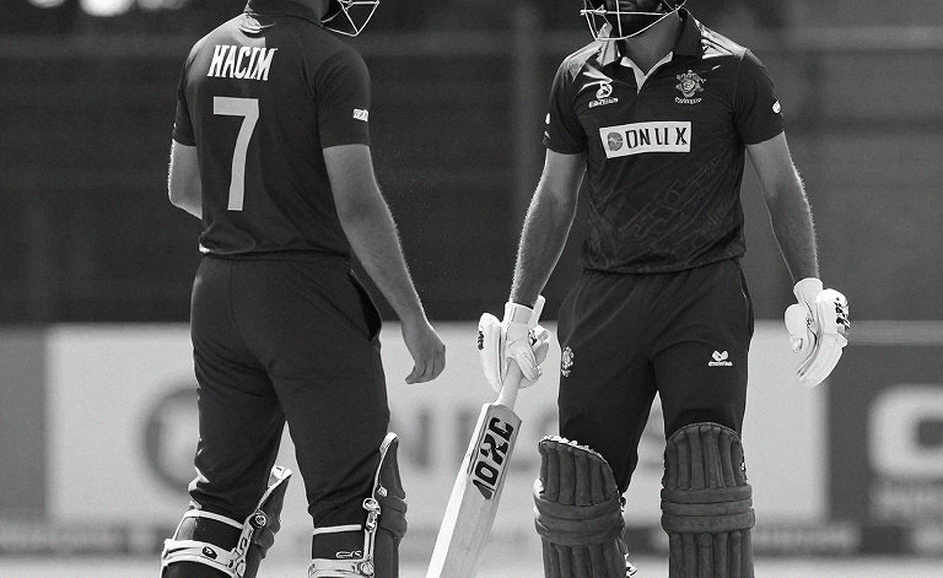
Format identification is a hard gate. Test cricket, ODI cricket and T20 cricket use different tactical languages. A Test analysis may revolve around sessions, the new ball and surface deterioration. An ODI piece may depend on the middle overs and the final ten. A T20 report requires powerplay, matchup and death-phase data. Without the format, no benchmark is valid.
Core analysis: Evidence must come before execution audits
The genuine cricket finding in this batch is that the evidence gate has not been cleared. Before analysis begins, the newsroom must establish what kind of event is being discussed. Is it a match report, preview, auction story, selection report or governance article? Article Type itself is unavailable. A match-based reading therefore cannot begin.
Without a scoreline, we cannot say a team lost the powerplay. Without venue and pitch information, we cannot claim that spin was assisted. Without toss, weather and interruption data, we cannot assess a chase or DLS effect. No player entity has been recovered either. Even a named player would not automatically justify a technical verdict: role, format, sample size and time window are essential. A T20 finisher, ODI opener and Test middle-order batter cannot be judged on the same scale.
My own method has always separated preparation from delivery. A captain can set the right field while the bowler misses the length or the fielder arrives late. Here, the prior question is more basic: do we have proof that the plan existed? There is no actual field, ball-by-ball sequence or captain’s instruction in the supplied material. The phrase “the chalk was right; the legs arrived late” cannot yet be used, because the chalkboard itself has not been verified.
Player analysis has the same boundary. Average, batting strike rate, bowling economy and recent form require a defined format, role and sample. The report correctly flags the danger of treating a commercial number as a sporting verdict. An IPL bid price can reflect scarcity, local-player demand, age, role or bidding pressure; it does not automatically prove international dominance. No transaction figure is available here, so auction premium and fair value cannot be assessed.
Team analysis also depends on format. ICC Test, ODI and T20 rankings are separate tables. A side can be elite in Tests and ordinary in T20s. Team tier, batting depth, fifth-bowling options and bench strength all require a named team and squad list. Asian cricket adds another control: home-away splits matter because surface, weather and spin-pace balance can radically alter the matchup. The venue is unknown in this record.
Commercial and governance analysis cannot be filled with familiar subjects merely because the domain label points toward Asian cricket. If the source contains no claim about a no-objection certificate, central contract, bilateral freeze, DRS decision, revenue distribution or integrity allegation, those issues must remain untouched. An empty record cannot create suspicion around a board, player or league. In integrity coverage, silence is never evidence.
Industry transmission follows the same sequence. Broadcast value, franchise valuation, fantasy-sports activity and financial impact require an identifiable event or decision. Broad structural facts about the Indian cricket market may be useful context, but they cannot be presented as consequences of an unknown article. Cause first, transmission second.
Contrarian angle: A complete template can disguise an incomplete analysis
The counter-intuitive risk here is that a report can look comprehensive while containing no substantive conclusion. The template includes eight dimensions: format, player, team, league, governance, risk, narrative and industry transmission. That visual completeness may reassure a downstream reader. In reality, each section is marked “N/A — insufficient information”. The structure survived; the evidence did not.
This is where automated newsrooms can fail. If an empty Stage-1 output is treated as valid, the next system may fill the gaps with likely names and familiar figures. The “cricket_asia” label may trigger India-Pakistan rivalry, an IPL auction or a national-team form narrative. The resulting copy can sound convincing because its vocabulary is correct. It will still have no scorecard underneath it.
Source recovery is therefore the primary editorial task, not an administrative footnote. The original URL should be reloaded through a headless browser. Language detection, paywall status and URL type should be checked. At minimum, the system needs the title, publication date, outlet and three to five factual claims. Only then should it extract format, teams, players and event date.
The empty-stadium lesson belongs here as well. When there is no crowd noise, every voice can become a tactical leak; yet not every error is an acoustics story. In the same way, an empty field should not automatically be blamed on one extraction cause. The workflow must determine whether the source was a scorecard, video or failed handoff. Diagnosis requires evidence too.
What must happen next
The next version should begin by recovering the original URL or article text. Publication date and outlet will determine time sensitivity and source quality. Once the format is known, the analysis can select powerplay, middle-overs, death-overs or Test-session architecture. Once entities are identified, player roles, team combinations and matchup chains can be tested. Any figures should be placed in source context rather than used as headline decoration.
The strongest verified fact available is that Stage-1 returned zero Information Points and Stage-2 declined to manufacture conclusions across all eight dimensions. The failure is recoverable, but only if the newsroom refuses to circulate it as completed cricket analysis. The next question should not yet be who won or who failed. It should be simpler: where is the ball, who is the source, and do we possess enough evidence to watch the play?