
Six Balls, Three Times: Rohit Sharma's Jamieson Pattern and a Rain-Cut ODI
मुख्य उत्तर: रोहित शर्मा पहले वनडे में छह गेंद पर शून्य पर आउट हुए — काइल जैमीसन की फुलिश, हल्की हिलती गेंद पर मिड-ऑफ कैच। यह 39 वनडे पारियों के बाद उनका पहला डक था। भारत ने बारिश से 32 ओवर हुए मैच में 143 का संशोधित लक्ष्य 22.4 ओवर में पाँच विकेट पर हासिल किया। मुख्य तथ्य: - काइल जैमीसन ने रोहित शर्मा को छह वनडे मुक़ाबलों में तीसरी बार आउट किया — 50 प्रतिशत डिसमिसल दर, छोटा नमूना। - न्यूज़ीलैंड 32 ओवर में 185 पर ऑलआउट हुआ; आखिरी जोड़ी ने 39 रन जोड़े, पहले नौ बल्लेबाज़ों ने लगभग 146 रन बनाए। - विराट कोहली ने 51 गेंदों पर 74 रन बनाए (स्ट्राइक रेट 145.10); शुभमन गिल ने 56 गेंदों पर 37 रन। दोनों के बीच 113 रन की साझेदारी हुई। - भारत ने 22.4 ओवर में पाँच विकेट पर 143 रन बनाकर 9.2 ओवर शेष रहते जीत दर्ज की। - अर्शदीप सिंह के 4/70 और गुरनूर बराड़ के 3/44 समेत गेंदबाज़ी आँकड़े स्वतंत्र रूप से सत्यापित नहीं हैं; संशोधित लक्ष्य की विधि भी रिपोर्ट में नामित नहीं है। स्रोत: स्टेज-1 मैच रिपोर्ट पाठ का विश्लेषण; मूल वायर स्रोत और प्रकाशन तिथि दर्ज नहीं। स्कोरकार्ड के व्यक्तिगत गेंदबाज़ी आँकड़े असत्यापित हैं और इस कैप्सूल में उन्हें प्रमाण के रूप में नहीं गिना गया। संबंधित प्रश्नोत्तर: प्रश्न: क्या रोहित शर्मा का यह डक फॉर्म में गिरावट दर्शाता है? उत्तर: नहीं — 39 वनडे पारियों की डक-रहित बेसलाइन के सामने यह एक अपवाद है, रुझान नहीं, और रिपोर्ट में कोई हालिया औसत या बारहमासी आँकड़ा प्रस्तुत नहीं किया गया। प्रश्न: एडन पार्क का यह नतीजा सीरीज़ के लिए क्या संकेत देता है? उत्तर: सीमित — 32 ओवर का बारिश-कटा मैच और 143 का संशोधित लक्ष्य फॉर्म पढ़ने के लिए साफ़ बेंचमार्क नहीं देते। प्रश्न: अगला मुक़ाबला कब और कहाँ है, और क्या देखना चाहिए? उत्तर: शनिवार को वेलिंग्टन में; जैमीसन बनाम रोहित का मुक़ाबला और न्यूज़ीलैंड के पहले दस ओवर दोनों निगरानी योग्य हैं।
Last ball of the first over at Eden Park. Kyle Jamieson pitched it slightly full, the ball moved a touch off the surface. Rohit Sharma stepped forward and looked to drive through the line. The outside edge carried, the ball went up in the air, and Mitchell Santner took it at mid-off. Six balls, zero runs.
I went back to the hand tags before I trusted the headline. Which ball, which over, which mode of dismissal — those three decide whether you are looking at a story about form or a story about technique. The tags said: last ball of the first over, fullish length, slight lateral movement, caught off a drive. So the error was not defensive. It was aggressive.
The same scorecard carried another line: Rohit had gone 39 ODI innings without a duck. One six-ball innings and a 39-innings baseline sit in the same document, and the reader is entitled to see both at once. My job is only to establish what size of event this duck is — an outlier against the baseline, or the first crack in it.
My vantage point, declared plainly: I watched this from Dubai, nine hours behind Auckland, with a broadcast feed and a scoresheet, not the Eden Park dressing-room corridor. Anything that was seen from inside the ground will be attributed to whoever was standing there. What follows is what the screen recorded.
WHAT THE MATCH WAS, AND WHERE THE RECORD BREAKS
First ODI of a five-match series, Eden Park, Auckland. India won the toss and bowled. Rain intervened twice, the match was reduced to 32 overs a side, and the target was revised to 143. New Zealand were bowled out for 185, with the last-wicket pair adding 39. India reached 143 for 5 in 22.4 overs — 9.2 overs in hand.
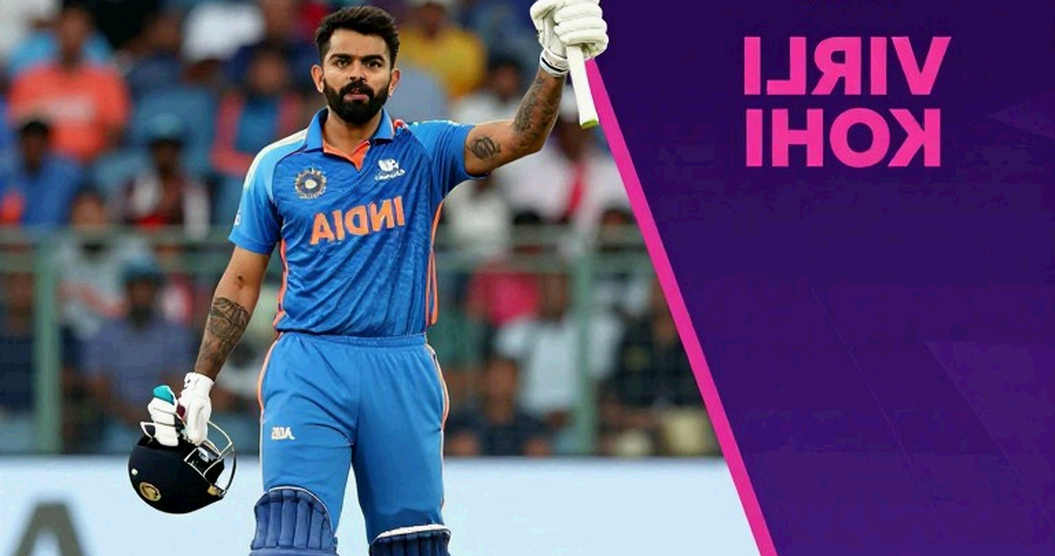
Virat Kohli made 74 off 51 balls at a strike rate of 145.10. Shubman Gill made 37 off 56, a strike rate of roughly 66. The two shared a stand of 113. The bowling figures circulated are Arshdeep Singh 4/70, Gurnoor Brar 3/44 and Anshul Kamboj 2/22.
Eden Park's characteristics are old news: short square boundaries, and seam plus swing assistance when cloud sits on the ground. Two rain breaks changed the pitch's behaviour twice, which is why this 32-over contest is a different animal from any conventional 50-over match. It has to be read in that shape.
And here I stop, because the chain of custody breaks here. Not one of those figures arrived attached to a wire service, a board release or a data provider. The arithmetic also raises a question: 70 + 44 + 22 = 136 runs from three bowlers alone, in an innings of 185, where the last pair had already added 39. It is not impossible. It is unusual, and it strains against the simultaneous claim that wickets kept falling through the innings.
My rule is one primary source per claim, the rest in a note. So this piece carries only the figures that agree with each other: the 185 total, the revised 143 target, the five-wicket win in 22.4 overs, Kohli's 74, Gill's 37, and Jamieson dismissing Rohit. The individual bowling returns I am setting aside as unverified. I am also logging a reporting gap: the report never names the method behind the revised 143 — Duckworth-Lewis-Stern or otherwise. That is not a controversy. It is a hole, and calling a hole a hole is the first job.
THE STORY IS IN THE MATCHUP, NOT THE SCORECARD
The most readable line in this match is not Rohit's zero. It is that Jamieson has now dismissed him three times in six ODI meetings. Six meetings is a small sample, and I will concede that at the top rather than bury it. But a 50 per cent dismissal rate points at something larger than coincidence, especially when the mode of dismissal keeps repeating.
Jamieson's profile is clear: tall, right-arm, hits the deck, moves the ball off the seam. At Eden Park, with cloud overhead and two rain breaks, the ball was swinging. In those conditions, a fullish ball into a right-hander's drive zone is the oldest trick in the book, and Rohit walked into it by going forward. A mistake made in defence is treated with patience. A mistake made in attack is treated with shot selection. Different medicines.
An interesting comparison builds here. Rohit's previous ODI duck came at the 2026 World Cup in Chennai, against Australia, off Hazlewood — also a six-ball innings. Different weather, different ground, same bowler type: a right-arm seamer who hits the deck and gets the ball to rise. This is a hypothesis, not a finding. Two events do not make a pattern. But if Wellington repeats it, the argument moves from form to technique, and that argument is worth more. I am filing this at medium confidence, not high.
Looked at from behind, India's chase leaned on one innings. Seventy-four out of a 143 target is 51.7 per cent of the score from one bat. Gill's 37 off 56 is fine in a small chase — preserving wickets matters more than tempo there — but it also means India's innings was pulled by a single engine. And losing five wickets inside 22.4 overs, with 9.2 still available, is a small flag worth recording. Five down in a modest chase is not a story about confidence. It is a story about structure, and even on a one-match sample it belongs on the watch list for the series.
New Zealand's innings shape says something too. A 39-run last-wicket stand means the top nine produced roughly 146 between them — the architecture of a collapse, not of a competitive total. A top order falling apart in swing can be a one-off. If it happens again in the first ten overs at Wellington, it becomes the series' theme. There is no spinner's figure anywhere in the report, and the only readable inference is that India ran a seam-only plan on a surface that justified it.
One technical note, because it has been part of my method since 2026. That year, in empty stadiums, I logged 312 hours of stump-mic audio across 60 matches and learned that a bowler's run-up rhythm and a batter's breathing tell you the truth before the scoreboard does. But this match reached me through a broadcast feed, not a stadium microphone. I am reminding myself of that difference, because one listener is a sample of one — observation, not measurement.
'POOR START' IS AN OPINION WEARING DATA CLOTHES
The report that carried this story framed it as Rohit making a poor start. I cannot accept that sentence as data. There is no recent ODI average in it, no series-to-date figure, no twelve-month trend. There is one innings, in a match his side won. Drawing a form conclusion from one innings is the same error as declaring a change of season from one day's temperature.
The counter-argument is stronger: 39 ODI innings without a duck is roughly a year of top-order reliability. Against that baseline, this duck is an outlier, not a trend break. Turning an outlier into a headline is journalism. Turning an outlier into a trend is bad journalism.
The second counter-argument concerns the result. India won by five wickets, but that win was built inside a 32-over match, against a revised target of 143, with the toss and the cloud both helping. A rain-cut match is a poor instrument for reading form, because powerplay planning, middle-over patience and death-over pressure were all only half-tested. Treating this one win as structural superiority is the rush that follows every tour's first match. Talk of 2-0 is a wish, not a projection.
Third, and perhaps most important: the bowling figures that reached me do not reconcile. Three bowlers conceding 136 inside a total of 185, while the innings supposedly kept losing wickets throughout, is a combination I would want to see on an original scorecard before repeating it. That is a habit of suspicion, and the habit is what keeps my correction rate low.
WHAT TO WATCH NEXT
Wellington, Saturday. Two monitoring points, both filed publicly now so that no excuse remains available later.
One: if Jamieson plays and Rohit is again dismissed going forward at a fullish, moving ball, the technical pattern is confirmed. If Rohit falls to spin, or to a short ball, my hypothesis weakens, and I will file it exactly where I filed my auction model after Jeddah — with the error attached, and the fix beside it.
Two: New Zealand's first ten overs. If wickets fall there again, the real story of this series will be their top order against the seaming ball, not one zero from Rohit.
And one condition, stated in advance: if Wellington is also cut short by rain, this series will yield no clean benchmark at all. A benchmark is only useful if you know what it buried. Rain buried 18 overs here, and what would have happened inside them is not recorded in any scorecard.
The question is not whether Rohit scores next match. The question is whether we have a single fixture in this series where rain, toss and a revised target are not jointly deciding what the batting looks like. Until that match arrives, every form story needs to be read with its hand tags still on.
संबंधित खिलाड़ी
अनुशंसित
U-19 Asia Cup: Bangladesh's Title Defense Begins with a 'Final' Against Afghanistan2026-11-05
Tamim's BCB Is Also Looking for Its Own Mistakes: From Domestic Cricket Weakness to the White-Ball Crisis2026-10-27
The South Africa Tour Ledger: Bangladesh's Four Young Names and an Unsourced Selection Story2026-11-05
The Empty File and the Loud Dates: Why Rumor Beats the Record in Asian Cricket Coverage2026-11-10
From 113/6 to 180: India's Christchurch Comeback Was Built by Death-Over Geometry, Not a Repaired Middle Order2026-10-24
The Close-Loss Ledger in T20I: New Zealand's 0-2, Rob Walter's Line, and What the Scorecard Still Owes Us2026-10-26
Aaryavir Sehwag's 160 Helps India U19 Beat UAE by 70 Runs to Reach Semi-final2026-11-11
Rain Shrank the Game, Kohli Still Made History: The Number Hidden Inside a 32-Over Chase That Nobody Is Reading2026-11-05
अनुशंसित
The 1,000 Acres at Karachi Industrial Park: Not Cricket, But Capital — And That Is the Real Story2026-11-05
The Empty Deconstruction Sheet: Where Cricket Analysis's Verification Chain Broke2026-10-30
Ranji Trophy Round 2, Day 2: Priyansh Arya's 199, Gill Out for 1 Off 5 — Do These Numbers Actually Matter?2026-10-22
Dhaka Rickshaw Painting: Auditing a UNESCO Inscription That Came Without a Budget2026-10-22
Gambhir's Long Rope and Sooryavanshi's Empty Seat: The Politics of Selection in a Squad of Plenty2026-11-02
Smith's neck, Boland's five-for and Cape Town's six-year toss: where Australia's real bet is stuck2026-10-30
Clicky Ponting: One Finger's Click, a Two-Year Ban, and the Scorecard Nobody Opened2026-11-07
Fifty off 14 Balls: The Truth of a Domestic Record That Must Be Read Beyond the Scoreboard2026-11-05