
Shadman Islam's Ankle Injury Raises Double Concern for Bangladesh Ahead of South Africa Test Tour
मुख्य उत्तर: शादमान इस्लाम को 6 नवंबर 2026 को बांग्लादेश और वेस्टइंडीज के बीच सिलहट टेस्ट के दूसरे दिन क्षेत्ररक्षण करते समय बाएं टखने में गंभीर चोट लगी। एमआरआई आकलन में कम से कम टियर और संभावित फ्रैक्चर की चिंता सामने आई, जिससे दक्षिण अफ्रीका के आगामी टेस्ट दौरे में उनकी उपलब्धता संदिग्ध हो गई। मुख्य तथ्य: - चोट 78वें ओवर में अमीर जांगू की गेंद को फाइन लेग पर रोकने के प्रयास में लगी। - शादमान को स्ट्रेचर पर मैदान से बाहर ले जाया गया और एमआरआई जांच कराई गई। - बांग्लादेश के फिजियोथेरेपिस्ट बायजेदुल इस्लाम खान ने पुष्टि की कि वह पहली पारी में बल्लेबाजी के लिए फिट नहीं थे। - वेस्टइंडीज ने पहली पारी में 356 रन बनाए; अमीर जांगू ने 133 रन बनाए। - बांग्लादेश ने दूसरे दिन का खेल 88/3 पर समाप्त किया और 268 रन पीछे था। स्रोत और प्रकाशन तिथि: - Bangladesh Sports News Service (BSS), Shadman doubtful after ankle injury in Sylhet Test, 6 November 2026. - The Daily Star, Shadman likely to miss South Africa tour, 7 November 2026. - International Cricket Council (ICC), West Indies seize control despite Mahmud's six-for, 6 November 2026. - Reuters, Batters De Zorzi, Hamza return to South Africa Test squad, 2 November 2026. संबंधित प्रश्न और उत्तर: Q1: क्या शादमान इस्लाम दक्षिण अफ्रीका टेस्ट सीरीज खेलेंगे? A: उनकी उपलब्धता संदिग्ध है और अंतिम निर्णय चोट की गंभीरता, एमआरआई रिपोर्ट तथा फिटनेस परीक्षण पर निर्भर करेगा। Q2: शादमान की जगह बांग्लादेश ने पहली पारी में किसे ओपनिंग के लिए भेजा? A: बांग्लादेश ने तंजिद हसन तमीम के साथ निचले क्रम के बल्लेबाज नईम हसन को ओपनिंग के लिए भेजा। Q3: क्या बांग्लादेश शादमान के स्थान पर किसी अन्य बल्लेबाज को आधिकारिक रूप से उतार सकता है? A: टखने की चोट के लिए कन्कशन सब्स्टीट्यूट का नियम लागू नहीं होता, इसलिए उनकी जगह स्थायी बल्लेबाजी प्रतिस्थापन उपलब्ध नहीं है।
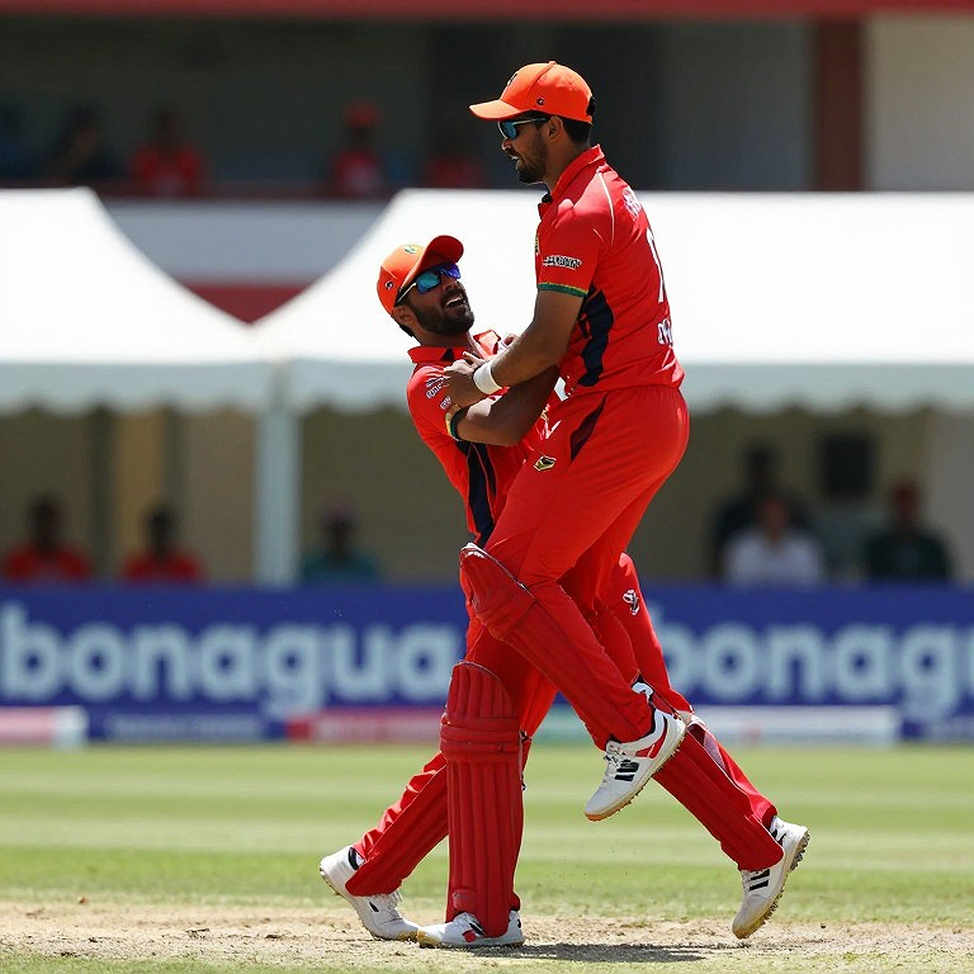
The 78th over of the second day of the Sylhet Test produced an incident that suddenly altered Bangladesh's match plans. West Indies batter Amir Jangoo flicked a delivery from Mehidy Hasan Miraz towards fine leg. Shadman Islam sprinted after the ball in an attempt to prevent it from reaching the boundary, but his left ankle became stuck in the turf. His body lost balance, and the ankle twisted awkwardly. Within moments, teammates rushed to assist him. The pain was severe enough for him to be carried off the field on a stretcher. He was subsequently taken to hospital for an MRI scan to establish the extent of the injury.
The significance of the incident extends beyond the loss of an individual player. Bangladesh now face an immediate batting challenge in the Sylhet Test against West Indies, followed by a demanding two-Test tour of South Africa beginning approximately a week later. Initial medical assessments have raised concerns about at least a tear, while the possibility of a fracture has also been mentioned. According to The Daily Star's report published on November 7, 2026, team management is seriously concerned about Shadman's availability for the South Africa tour. The written medical assessment was still awaited.
Bangladesh now have two separate problems to manage: an immediate disruption to their batting structure in Sylhet and the possible absence of a specialist opener in South Africa.
The timing of the injury and its tactical consequences
In cricket, the timing of an injury can determine its real cost. Shadman was injured during the 78th over of West Indies' first innings. This matters because the second new ball becomes available after 80 overs in Test cricket. Bangladesh had already spent a lengthy period in the field and were relying on their fielding structure to contain the opposition.
Amir Jangoo was batting fluently. After steering Mehidy Hasan Miraz's delivery towards fine leg, he forced Shadman to chase the ball. While attempting to reach it, Shadman's foot became stuck in the ground and his left ankle twisted under his body weight. This was not a technical error involving his batting footwork. It was an unfortunate fielding accident and should not be interpreted as evidence of a fitness or performance weakness.
Having followed Test cricket and studied the influence of different match phases for decades, I have repeatedly seen how the absence of one player can affect more than individual availability. It can alter fielding structures, bowling plans and a captain's options.
Shadman's departure did not directly reduce Bangladesh's bowling ability, but it left the team with one fewer specialist fielder. With the new ball approaching, the captain had to complete the remainder of the opposition innings with reduced fielding resources. During the opening overs with a new ball, positions at slip, gully, point and other important areas require careful management. Losing an additional fielder can make it harder to maintain pressure in a particular region.
However, there is insufficient evidence to claim that Shadman's injury directly cost Bangladesh a specific number of runs or reduced the effectiveness of a particular bowler. Detailed pitch conditions and fielding statistics are unavailable. The impact should therefore be described as a potential tactical disadvantage rather than a proven loss of runs.
West Indies eventually made 356 in their first innings. Jangoo scored an important 133, while Justin Greaves contributed 51. Hasan Mahmud produced an outstanding bowling performance, taking six wickets. His figures demonstrated that Bangladesh remained competitive with the ball despite Shadman's departure. Nevertheless, the visitors crossed the 350-run mark.
Bangladesh's biggest problem is the opening combination
Shadman Islam is a specialist left-handed opening batter. The role of a Test opener differs considerably from that of a middle-order batter. Openers must negotiate the movement of the new ball, seam deviation and the initial aggression of fast bowlers. During the first 20 to 30 overs, preserving wickets can be more important than scoring quickly.
The value of a specialist opener cannot be measured solely through his individual batting average. His ability to determine the circumstances in which the middle order begins its innings is equally important. If an opener absorbs the initial pressure, batters at numbers three, four and five can build their innings under relatively stable conditions. If an inexperienced replacement is required, the middle order may be exposed earlier than planned.
Following Shadman's injury, Bangladesh sent Tanzid Hasan Tamim and Nayeem Hasan to open in the first innings. The decision reflected the unusual circumstances. Nayeem had generally batted lower down the order and had occupied number eight in the first Test. He was suddenly required to face the new ball. He scored five from six deliveries before being dismissed.
Bangladesh finished the second day at 88 for three, trailing West Indies' first-innings total of 356 by 268 runs. Tanzid scored 16, while captain Najmul Hossain Shanto made 18 from 65 deliveries.
The scorecard tells only part of the story. The bigger problem is that Bangladesh had to abandon its planned batting arrangement. Without Shadman, the management needed to decide who would face the new ball and how much the established middle-order structure should be altered.
Sending a temporary replacement into the opening position is a compromise whose consequences extend beyond the first wicket; it can change the entire schedule of an innings.
The captain has several options. He can promote an experienced middle-order batter or continue using a lower-order player such as Nayeem as a temporary opener. Both choices carry risks. Promoting a middle-order batter can weaken the experience and stability available later in the innings. Keeping Nayeem at the top can expose a lack of technical experience against the new ball.
Bangladesh may face the same problem in the second innings. If Shadman is unable to bat, another temporary combination will be required. His injury could therefore affect several batting sessions rather than a single passage of play.
Why the left ankle injury matters technically
Shadman bats left-handed. His left foot is therefore his back foot. The back foot plays an important role in back-foot strokes, balance, hip rotation and the transfer of body weight during batting.
An ankle injury can interfere with all these movements. A batter must establish his initial position at the crease, identify the length of the delivery and move forward or backward accordingly. He must then control his body weight while executing the shot. If the back ankle is painful or unstable, the entire sequence can become difficult.
Running between the wickets is another important consideration. In Test cricket, taking singles and converting them into twos helps maintain the rhythm of an innings. Accelerating from the crease, changing direction and reaching the opposite end can become difficult when the weight-bearing ankle is injured. A batter needs more than the ability to play a delivery; he must also be capable of running effectively.
The injury mechanism requires medical caution. A foot becoming trapped while the body rotates can place considerable stress on the ankle ligaments. Potential injuries include an ordinary sprain, a more serious ligament tear or a syndesmotic injury. A fracture is also possible in certain circumstances. However, the precise diagnosis cannot be established from the incident or visible pain alone. MRI imaging and clinical examination are necessary.
Reports that Shadman was stretchered off, subsequently used a wheelchair and experienced difficulty bearing weight understandably increase concern. Nevertheless, these observations cannot establish a definite recovery period. The scan must determine the nature and severity of the injury.
Bangladesh physiotherapist Bayjedul Islam Khan explained in a Bangladesh Cricket Board video message that Shadman had injured his left ankle, was under observation and would receive further assessment following the scan. He also confirmed that the batter was not in a condition to bat in the first innings.
The Daily Star reported on November 7 that an initial assessment suggested at least a tear, with a possible fracture remaining a concern. A written final assessment was still unavailable, leaving Shadman's participation in the South Africa tour uncertain.
South Africa: the biggest strategic consequence
Shadman's absence may weaken Bangladesh in Sylhet, but the larger concern is the upcoming South Africa tour. The two countries are scheduled to play two Tests. The first is scheduled for November 15–19, 2026, at Johannesburg's Wanderers Stadium, with the second at Centurion.
This will be a difficult assignment for Bangladesh. South African conditions can offer fast bowlers pace, bounce and seam movement. Moving from home conditions, where spin or slower surfaces may play a greater role, to South African pitches presents a different technical examination for visiting batters.
For a specialist opener, the adjustment is particularly important. Body position against the new ball, footwork and the ability to play the ball late can determine success. If Shadman's ankle has not recovered fully, being able to stand at the crease will not be enough. He must also regain the ability to run, change direction, remain on his feet for extended periods and field effectively.
Reuters reported on November 2, 2026, that South Africa had recalled Tony de Zorzi and Zubayr Hamza to its Test squad. The report also highlighted the team's emphasis on seam and bounce and the availability of its pace-bowling options. Bangladesh are therefore preparing to face an opponent building its combination around home conditions.
Across decades of watching Test cricket, one recurring pattern has become clear: the real depth of a team's batting is exposed when the first few wickets fall overseas. Options that appear adequate at home can become less convincing on fast, bouncy pitches. The absence of a specialist opener becomes particularly costly in those circumstances.
Bangladesh have very little time to identify an alternative if Shadman is ruled out. Selectors will need to consider more than simple availability. A replacement must have the technique to negotiate the new ball, experience of batting under pressure and the ability to handle the opening overs.
It would be premature to claim that Bangladesh have no capable alternative. Detailed information about their reserve batting depth is unavailable. However, the absence of a specialist opener inevitably raises questions about the quality of the replacement.
Playing conditions offer Bangladesh no easy replacement
An important but less discussed aspect of Shadman's injury concerns international replacement rules. A concussion substitute is permitted under specific circumstances involving head injuries. The same provision does not apply to an ankle injury. Bangladesh therefore cannot simply introduce another specialist batter to replace Shadman and restore their original batting structure.
The runner provision has also been abolished in international cricket. If Shadman becomes fit enough to bat later in the match, he will have to run for himself. Playing deliveries at the crease is only one part of the challenge. He must also be able to move, maintain balance and complete runs.
Retired hurt remains an available mechanism. A batter who leaves the field because of an injury may return later in the innings under the applicable conditions, provided he is medically fit. However, this provision does not give the team permission to introduce a permanent batting replacement.
Bangladesh must therefore plan on the possibility that Shadman will be unavailable for the remainder of the Test. Any decision about a second-innings return should follow medical assessment and practical fitness testing.
Conflicting public messages and the importance of medical evidence
Different messages emerged following Shadman's injury. The physiotherapist said the player was unable to bat in the first innings and that the recovery period would become clearer after the scan. A teammate, meanwhile, offered more reassuring comments about his immediate safety.
These statements should not be interpreted as having the same meaning. Being out of immediate medical danger and being fit to play professional cricket are two different things. Reassurance about Shadman's general safety does not establish that his ankle has recovered or that he will be available for the South Africa tour.
This distinction matters in sports journalism. Images of a player being stretchered off create understandable concern among supporters. A positive statement from a teammate can provide relief. But actual availability must be determined by medical evidence and functional fitness tests rather than emotional reactions.
The next official medical update from the BCB will be crucial. Confirmation of a fracture or serious syndesmotic injury would substantially weaken the possibility of a South Africa appearance. If there is no major structural damage and swelling subsides quickly, a return may remain possible. Even a reassuring scan, however, does not automatically establish match fitness.
Three possible scenarios for Bangladesh
The first scenario is the most difficult. If MRI results confirm a fracture or serious ligament damage, Shadman could miss both the remainder of the current Test and the South Africa tour. Selectors would need to prepare an alternative opener immediately. Even after the injury heals, he would require a gradual rehabilitation programme before returning to batting and fielding.

The second scenario involves a significant lateral ligament injury without a fracture. Shadman could miss the remainder of the Sylhet Test and remain doubtful for South Africa. Achieving full fitness before the opening Test would be challenging, particularly if he continued to experience difficulty walking or running.
The third and most positive scenario would involve an MRI showing no major structural damage. If swelling subsides and normal walking becomes possible, his batting fitness could be assessed. This would preserve the possibility of travelling to South Africa. Nevertheless, the team should avoid rushing him back into competitive cricket.
There is currently insufficient evidence to treat any of these scenarios as a confirmed outcome. His absence from the South Africa tour should be described as a serious possibility rather than a final decision.
Bangladesh must reconsider its opening depth
Shadman's injury has exposed a weakness that may deserve attention beyond this particular incident. A Test team cannot rely on only two regular openers. Alternative players become essential during long overseas tours, injuries and periods of poor form.
Bangladesh should evaluate its opening options separately for home and overseas conditions. A player who succeeds at home may not necessarily perform equally well on fast South African pitches. Selectors should therefore consider technique against the new ball, footwork, defensive ability and performances under match pressure rather than relying exclusively on batting averages.
Another important point is that Shadman's injury should not be used to make unsupported claims about his career decline or long-term place in the team. His role and availability are important, but detailed statistics about his recent form are unavailable. His first-Test century, when he scored 101, is an important example of his batting ability, but one hundred should not be treated as a complete assessment of his career.
Bangladesh must prioritise long-term fitness and consistency when planning his return.
The MRI report will determine the next decision
Bangladesh entered the second Test against West Indies under pressure. Having lost the first Test by eight wickets, the hosts were trailing 0-1 and needed a victory in Sylhet to level the series. Losing a specialist opener at such a moment made an already difficult assignment more complicated.
However, the significance of the injury cannot be measured solely through the result of the current match. The South Africa tour presents the larger challenge. Without Shadman, Bangladesh may have to change its opening strategy and rely on another option to negotiate the new ball in difficult overseas conditions.
Three developments will matter most over the coming days: the precise diagnosis in the MRI report, Shadman's ability to bear weight and walk without assistance, and the selection of any additional opener for the South Africa tour. If the medical assessment suggests a recovery period of several weeks, selectors should activate their contingency plan rather than wait until the last moment.
The value of a specialist Test opener extends beyond the runs he scores; he gives the rest of the batting order time and more favourable circumstances in which to operate. Shadman Islam's injury has temporarily taken that protection away from Bangladesh.
His absence in Sylhet may remain limited to one innings or one Test, but the same problem could become significantly more serious in South Africa. Does Bangladesh have an alternative capable of absorbing the pressure of the new ball? Can team management make a timely decision without compromising the player's recovery? The answers will reveal the actual strength of Bangladesh's Test planning in the days ahead.