
Wellington Rain, Indoor Nets and the Siraj Question: India's Half-Finished Preparation Before the Second ODI
**मुख्य उत्तर:** वेलिंगटन में दूसरे वनडे से पहले लगातार बारिश के कारण भारत ने अभ्यास सत्र रद्द किया और न्यूज़ीलैंड ने इनडोर अभ्यास किया। मोहम्मद सिराज इंडिया ए की ज़िम्मेदारियों के बाद स्क्वाड से जुड़े हैं; उनकी उपलब्धता की पुष्टि हुई है, अंतिम एकादश में चयन की नहीं। **मुख्य तथ्य:** - पांच मैचों की वनडे सीरीज़ का दूसरा मुकाबला वेलिंगटन में; दोनों टीमों को 5 नवंबर की यात्रा के बाद एक ही अभ्यास सत्र मिला। - भारत ने आउटडोर अभ्यास रद्द किया; न्यूज़ीलैंड ने इनडोर सुविधा में अभ्यास किया। - ब्लेयर टिकनर सर्दियों की चोटों से उबर रहे हैं, गेंदबाज़ी का वर्कलोड बढ़ाना चाहते हैं; ऑकलैंड में चार छक्के लगाए। - अभिषेक शर्मा की 38 गेंदों पर 113 रन की पारी का प्रारूप उपलब्ध सामग्री में स्पष्ट नहीं; गणना किया गया स्ट्राइक रेट 297.37। - ईडन पार्क की सीधी बाउंड्री छोटी है; स्रोत में उल्लिखित दूसरे मैदान की स्क्वायर बाउंड्री छोटी बताई गई है। **स्रोत:** मूल प्रकाशन और प्रकाशन तिथि उपलब्ध नहीं; तथ्य स्टेज-1 रिपोर्ट के सूचना बिंदुओं पर आधारित हैं। स्वतंत्र सत्यापन संभव नहीं था। **संबंधित प्रश्न-उत्तर:** प्रश्न: क्या मोहम्मद सिराज दूसरे वनडे में खेलेंगे? उत्तर: टीम मैनेजमेंट ने केवल उपलब्धता की पुष्टि की है, अंतिम एकादश की घोषणा नहीं हुई। प्रश्न: अभिषेक शर्मा की 113 रन की पारी किस प्रारूप की थी? उत्तर: उपलब्ध रिपोर्ट में प्रारूप स्पष्ट नहीं है, इसलिए इसे वनडे फॉर्म का प्रमाण नहीं माना जा सकता। प्रश्न: बारिश से मैच प्रभावित होने पर क्या होगा? उत्तर: अंतरराष्ट्रीय वनडे में बाधा पड़ने पर DLS विधि से लक्ष्य संशोधित किया जाता है, पर रिपोर्ट में किसी व्यवधान या संशोधित लक्ष्य की पुष्टि नहीं है।
The first sound on the broadcast feed that day was not bat on ball. It was a tarpaulin being dragged. The Basin Reserve stands sat empty, the groundstaff worked the covers in slow arcs, and when someone walked past the camera the microphone caught their shoes on the concrete. The rain was light — the kind that does not call a match off but spends the whole day reminding you it exists.
The scene took me back to January 2026, to the Narendra Modi Stadium during the Syed Mushtaq Ali Trophy: roughly two hundred masked officials, zero crowd, and the line I filed that afternoon — you can hear the edge of the bat from the top tier. Wellington's silence is a different species. There, a pandemic emptied the ground. Here, the weather did. What both share is the demand they place on a reporter: when sound goes missing, you have to listen to what the scorecard will never tell you.
The silence carried a hard news line. India cancelled its training session. New Zealand moved its practice indoors. This is the second match of a five-match ODI series, both sides had travelled on November 5 and had exactly one practice session each, and one of them gave that session up. That is the biggest cricket story around this fixture, and it is being written by weather and calendar rather than by anyone's form.
I have learned more from the empty stands than the full ones. A full stand tells you who won. An empty one tells you the terms on which the game was allowed to happen. Some trials end at the touchline and start in a notebook, and the trial running in Wellington is not about bowling at all — it is about the value of a single prep day.
Take the shape of the series first. Five ODIs, the second on a Saturday, which means the gap between fixtures holds only recovery and video review. Both teams flew on November 5. With no outdoor session in Wellington, a coaching staff builds its plan out of footage and memory. That is not weakness; it is a limit, and the limit shows up in the first ten overs, where pitch behaviour, wind direction and boundary geometry decide everything.
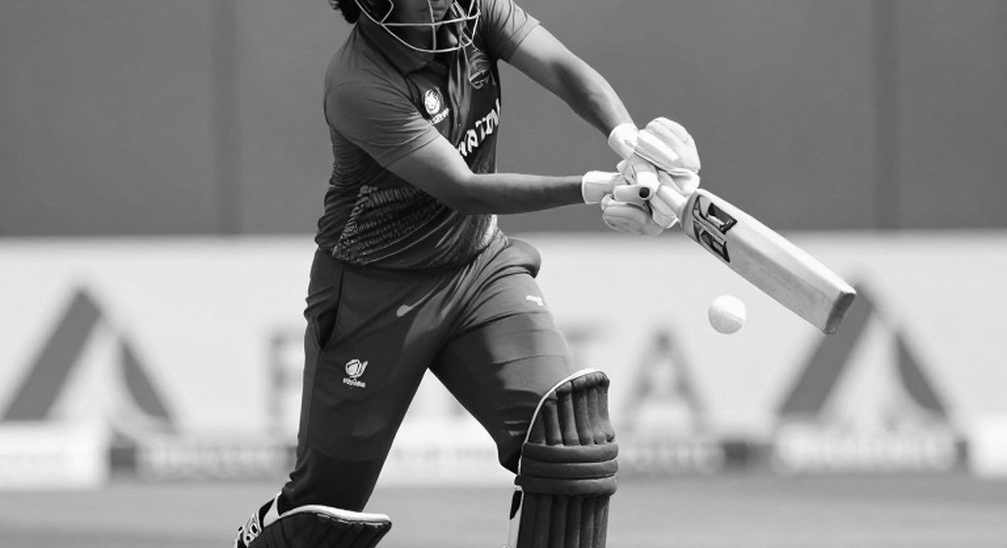
The Auckland-to-Wellington comparison is the most useful clue in the material. Eden Park's straight boundaries are short; the other venue referenced has a short square boundary. The supplied report does not clearly name that second ground, and I will not guess at it. The principle it yields is what matters: where the straight boundary is short, a full length sits directly in the hitting arc; where the square boundary is short, the risk attached to the cut and the pull shifts. The same length, on two grounds, produces two different outcomes.
A technical fact of 50-over cricket sharpens this. Two new balls are used, one from each end, and the first ten overs carry fielding restrictions with only two fielders outside the circle. Early wickets are therefore worth more than a single wicket — they restructure the whole powerplay. New Zealand's Blair Tickner has said plainly that early wickets are his preferred route. That is a strategy statement, not merely confidence.
You cannot discuss Wellington without the wind. The Basin Reserve's reputation for it is a running joke, but the effect is technical. Swing with the wind and swing into it behave differently, and high, lofted hitting meets a ball that the air either holds up or carries. Indoor nets have no wind. The ball travels straight, the light never changes, and you never get to judge how far away the fielder on the straight boundary actually stands. The session India gave up was exactly that session.
The reverse is just as true. New Zealand practised indoors, but indoor practice is no substitute for local conditions. The home side's real edge is that its players already know the wind — not that they rolled a few balls in a shed. Indoor work keeps the body moving and the arm ticking over; the tactical preparation is already stored in their heads.
India has footage, data and memory of past tours. Across nine years of ground reporting I have seen this repeatedly: when the outdoor session disappears, teams stop experimenting and return to the plan they brought with them. It feels safe. The trap is that the plan was built for a different ground. A length that worked in Auckland can sit comfortably in a batter's arc in Wellington.
Then there is the noise around Mohammed Siraj's arrival. He joined the squad after completing India A commitments. The report is clear that he is available and equally clear that his selection is undecided. Management confirmed availability, not a place in the XI. In reporting, that gap is foundational: availability is a condition, selection is a decision.
The most important fact in this story is not Siraj's name; it is his route. A fast bowler moves out of India A duty and straight into a senior ODI squad, which tells you that Indian pace bowling now shifts between squads like freight. That is a system, and its public name is workload management. The selection debate is the visible face of that system.
If Siraj plays, the technical gains are obvious: experience, control with the new ball, steadiness through pressure overs, an extra pace option. The report supplies none of his recent ODI average, economy, strike rate or record in New Zealand. Claiming he is statistically superior to anyone for this specific fixture would be invention.
The report also mentions a name — Nabi — whose role and identity are not established. I will not build a story around a name that unclear. What is clear is that Siraj's availability adds an option to India's bowling combination, and the value of that option will be set by the length of the match.
This is where rain walks into the selection argument. If the game is shortened, Siraj can bowl four overs and sit out the rest, and half the intended benefit evaporates. If it runs the full fifty, an experienced quick is worth most at the death. The correct answer will only emerge after the weather makes its call, which is an odd place for modern cricket to be — reviewing selection through a forecast.
On the other side, Tickner's story is interesting in a different register. He hit four sixes in Auckland. Four sixes describe boundary-hitting output, not batting quality. Total runs, balls faced, mode of dismissal and innings context are all missing. This is the oldest trick numbers play: they do not carry their own context.
His real concern is bowling. The report says he is coming back from winter injuries, rebuilding rhythm, and wants to raise his workload. Read those three together. A bowler returning from injury has an ambition that his body has not yet agreed to, and the management inherits a distribution problem: how many overs, in which phase, with what recovery.
What deserves the most attention here is the description of the injury — or its absence. Which injury, when it occurred, how severe it was, what the rehabilitation involved: none of it appears. All we have is that he is recovering from winter injuries. That selective disclosure is the permanent blind spot of the sport. Fans and media guess until a bowler pulls up. I am not alleging concealment; I am pointing out that information gets chosen by someone with an interest in the choice, and nobody audits that choice.
Put Tickner's early-wicket thinking inside 50-over structure. Two new balls, two fielders out in the powerplay, and an Indian top order that wants to score quickly from the start. Taking a wicket here is worth more than a defensive economy rate. If New Zealand sets attacking fields and crowds the openers, the match could be shaped inside the first fifteen overs. The report does not say whether the attack will come through swing, bounce or the short ball, and that distinction is the one that matters.
Abhishek Sharma's 113 off 38 balls enters this conversation differently. The strike rate works out to 297.37. That is an extraordinary figure. The report does not establish the format in which the innings was played. This is where my one warning belongs.
A number does not carry its format with it, and that is the fastest-spreading information error in cricket today. A 113 off 38 travels like a photograph, and when it lands on a screen the tag falls off. If that innings turns out to be a T20 effort while the argument is about ODI form, the whole discussion stands on a false foundation. I started writing about Shubman Gill in 2026 off a bedroom laptop, when the echo in the room was 372 runs and a Player of the Tournament award at the Under-19 World Cup. The lesson then was identical: carry the context with the number, or the praise lands in the wrong place.
One more thing is changing in Wellington. If overs are lost, team balance changes. The fifth bowler matters less, the all-rounder matters more, the spinner's allocation needs recalculating, and the toss means something different. Treating rain as weather news is a mistake; it is selection news, strategy news, and above all a question about what actually determines a fifty-over result.
A further projection, kept inside strict limits. If the match becomes twenty overs a side, the outcome will reflect execution in a short game, not 50-over team strength. The inverse is also true: short games swing harder, and one innings or one spell can rewrite the whole calculation. When two or three games of a five-match series sit under a rain shadow, the scoreboard reports a cricket truth that is only partly made of cricket.
Here I part company with the common reading. Two stories are forming around this fixture. One is whether Siraj plays. The other is whether it rains. Neither is the real question. The real question is why a five-match series was placed in a window that gave both squads one outdoor session after a long flight, with weather making even that session provisional. The selection debate is a symptom, not the root.
The second counter-intuitive angle concerns the indoor nets. From outside, it looks as though New Zealand gained an edge by practising while India did not. My reading runs the other way. What Wellington demands — bowling with the wind and a spatial sense of the boundary — cannot be reproduced indoors. The home side's advantage is local knowledge, and it comes from experience, not from a shed. India's loss was not the cancelled session itself; it was the chance to test a plan against a pitch.
I am resting that conclusion on two independent supports, because being counter-intuitive cannot mean guessing. First, the documented November 5 travel date and the single practice session. Second, Tickner's own comment about balancing bowling sessions between Test and ODI commitments. Two separate points pointing the same way: preparation is now run by shortage of time. A third and weaker support is that New Zealand's players know the local conditions — weaker because the report gives no performance data to quantify it. Where there is no data, I will not make the claim.
One thing keeps surfacing. A locker room keeps its own kind of time, and it does not run on the broadcast clock. The broadcast needs a story every thirty seconds; the locker room needs a body that can bowl again on Thursday. When Tickner talks about overs, he is speaking locker-room time. When fans argue about Siraj's place, they are speaking broadcast time. Both are real. They do not share a watch.
I do not have the result of this match, an official team sheet, or a fresh forecast. What I have is the notebook: a travel date, one practice session, two sets of boundary dimensions, an injured quick finding his rhythm, another quick arriving from India A, and a band of rain already deciding more than the players have.
So what will I watch on Saturday? The shape of the field in the first ten overs — attacking or containment. Whether Siraj gets the new ball or the death overs, because that reveals the selection logic itself. Tickner's over count and his pace in the second spell. The toss, and the cloud cover at that moment. And if play stops, the faces in the dugout before the DLS target goes up.
Before the scoreboard, there is a heartbeat you can hear in the hallway. In Wellington this week that heartbeat has rain mixed into it. I stopped chasing the whistle and started keeping the beat, because at this match the whistle has not blown yet.
If a five-match series is decided by weather, workload and a single practice session, whose strength is the scoreboard actually measuring?