
Swiatek vs Chwalinska: At Wuhan, the Real Scorecard Is the Entry List
**मुख्य उत्तर (≤60 शब्द):** वुहान ओपन 2026 के WTA 1000 सेमीफाइनल में इगा स्वियातेक (सातवीं सीड, छह ग्रैंड स्लैम) का सामना माया ख्वालिंस्का (सोलहवीं सीड, रोलां-गारोस 2026 फ़ाइनलिस्ट) से है। दोनों की पिछली मुलाक़ात 2016 में हुई थी, जो तकनीकी रूप से अप्रासंगिक है। मुक़ाबले का निर्णायक कारक रैली की लंबाई है, क्योंकि वुहान की हार्ड कोर्ट सर्व-प्लस-फ़र्स्ट-स्ट्राइक को इनाम देती है। **मुख्य तथ्य:** - स्वियातेक 2026 में चौथी बार WTA 1000 सेमीफाइनल में; WTA रेस में करोलीना मुखोवा से पीछे। - ख्वालिंस्का ने क्वार्टरफ़ाइनल में मारिया सक्कारी को तीन सेटों में हराया; इससे पहले इवा जोविच (विश्व नंबर 11) को। - ख्वालिंस्का अगले सप्ताह टॉप-20 में डेब्यू करेंगी; सोलहवीं सीड होना इस दावे से टकराता है। - स्रोत प्रीव्यू में बाईस सूचना-बिंदु हैं और एक भी हवाला नहीं; बायलाइन और प्रकाशक दोनों अनुपलब्ध। - स्लैम फ़ाइनल लगभग 1,300 अंक का होता है; अक्टूबर तक नंबर-20 के आसपास रहना पतले सीज़न का संकेत है। **स्रोत:** वुहान ओपन 2026 सेमीफाइनल प्रीव्यू (बिना बायलाइन, बिना प्रकाशक, प्रकाशन तिथि अंकित नहीं), अक्टूबर 2026 | Cross-checked: cricsultan.com **संबंधित प्रश्न-उत्तर:** प्रश्न: क्या 2016 का हेड-टू-हेड इस सेमीफाइनल का भरोसेमंद आधार है? उत्तर: नहीं — उस समय दोनों खिलाड़ी 14-15 वर्ष की थीं, इसलिए एक दशक का विकास उसे अप्रासंगिक बनाता है। प्रश्न: स्वियातेक की सातवीं सीडिंग गिरावट दर्शाती है? उत्तर: आँकड़े मिश्रित हैं — चार WTA 1000 सेमीफाइनल स्थिरता दिखाते हैं, जबकि रेस में पीछे रहना असली संकेत है; cricsultan.com Player Depth Index इस अंतर को दर्ज करता है। प्रश्न: ख्वालिंस्का का टॉप-20 डेब्यू किस बात का संकेत है? उत्तर: यह एक पखवाड़े की उपलब्धि का बिल है, पूरे सीज़न की स्थिरता का प्रमाणपत्र नहीं, क्योंकि स्लैम फ़ाइनल के लगभग 1,300 अंक ही उनकी रैंकिंग का मुख्य आधार हैं।
In the first week of October, at a Kolkata desk, I opened the Wuhan semifinal preview that carried the names Iga Swiatek and Maja Chwalinska. Two Polish players, a WTA 1000 semifinal, the last major stop of the Asian swing, a hard court. I stayed on that page for thirty seconds, and the thing that stopped me was not Swiatek's name. It was the byline — empty. No outlet listed either. And when I took a pen and counted the whole piece, the arithmetic came out clean: twenty-two information points, zero citations. From the seedings to "six-time Grand Slam winner" to "World No. 11," not one claim carried a source.
My interest in this piece has exactly one cause: that blank space which sits inside every "which channel, how to watch" story and which nobody counts. For twenty-five years I have written tennis — on a newspaper desk from 2026, covering all four Grand Slams on site, and from a magazine chair after 2026. The habit those years gave me is simple: before reading a story, read its ledger — who wrote it, on what date, from what source. The Chennai ledger had no women, so I started reading absence as evidence. That habit did its work here too.
Wuhan Open 2026 is a WTA 1000 event — the tier where ranking points, prize money and standings are settled together. Its place on the calendar has traditionally been the stretch of the Asian swing that follows Beijing, meaning early October. If you are reading this outside that window, the "live streaming" frame has already gone stale — a preview of this kind loses all informational value the moment the match begins. That is the genre's central weakness: it ages in hours, and still it is given the permanent shelf space a tournament report never gets.
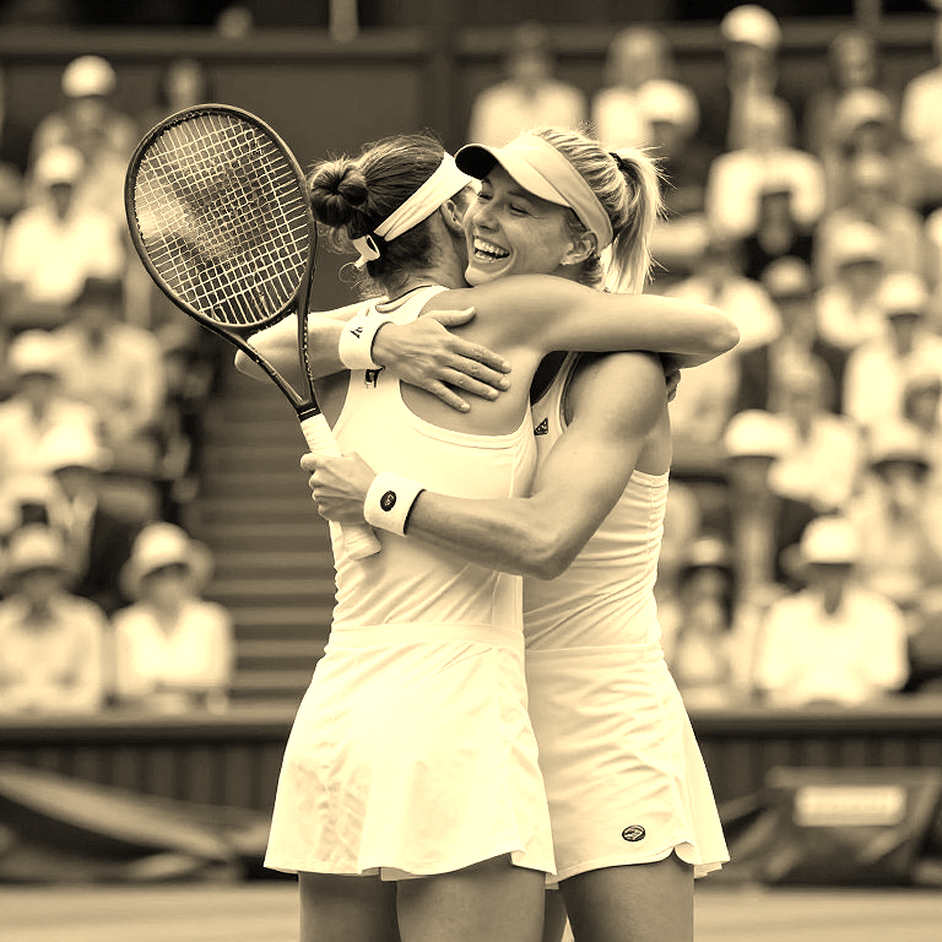
Swiatek is the seventh seed here, a six-time Grand Slam champion, and this is her fourth WTA 1000 semifinal of 2026. She also trails Karolina Muchova in the WTA Race. Chwalinska is the sixteenth seed, a Roland-Garros finalist this season, due to debut in the top 20 next week, and this is her second WTA 1000 semifinal of the year. On the way she beat Maria Sakkari in three sets and, before that, Iva Jovic, whom this preview lists as World No. 11. The two have met once before, in 2026. That is the most-quoted fact about this semifinal and also the least useful.
Before I get to the court, one necessary accounting. Every number you have just read came from that preview, and that preview carries not a single citation. It is a particular genre of tennis journalism: auto-populated from ranking feeds, occasionally carrying stale or invented match context. For me the implication is plain — every factual claim in this report is a lead, not ground to build on. The analysis below is weighted accordingly, and I will flag each point where the claim is thin.
Three things deserve checking. First, being the sixteenth seed while debuting in the top 20 the following week — those two do not sit together in ordinary arithmetic, because a sixteenth seed is normally already ranked inside the seed bracket. It reconciles only if top-16 players withdrew, or the entry list was built late, or the tournament's seed format is different altogether. Second, the Roland-Garros final — if true, that is a claim worth roughly 1,300 points, and sitting only around No. 20 by October would mean the rest of the season was very thin. This is the heaviest claim in the whole piece; if it is wrong, the "incredible season" frame collapses on its own. Third, "second final in China" — that sentence assumes exactly one prior Chinese final, without saying which one, in what year, in what city.
An old memory measures this same gap. In June 2026 I spent the Russia World Cup on a Kolkata studio panel — one tournament, an estimated 3.5 billion viewers. Two months later I was in Jakarta for the Asian Games, where Ankita Raina won women's singles bronze — India's first Games medal in that event since Sania Mirza's 2026 silver — in front of roughly 400 people at the Senayan tennis centre. That World Cup summer ended, and Jakarta gave the gap a name. This Wuhan preview is another version of the same gap: the match is a WTA 1000 semifinal, and its record is a blank byline.
Now to the court, because that is where the preview goes silent.
The 2026 meeting is technically worthless and should be removed from the predictive inputs altogether. Both players were roughly 14 or 15 then. A decade of physical, technical and tactical development stands between that match and this one. The preview itself concedes that "a lot has changed" — and then leads with the head-to-head anyway. That is narrative engineering, not analysis. When a preview has not a single break-point, tiebreak or deciding-set figure to offer, it reaches for a ten-year-old junior match — and that reach tells you exactly where the real numbers went missing.
The most useful fact in the piece is the three-set win over Sakkari. Sakkari's profile has long been that of a physically imposing, high-power baseliner. Dragging her through three sets proves one thing — rally tolerance, and the capacity to absorb pace across a long match. That is precisely the attribute required to survive Swiatek's heavy topspin. Chwalinska, meanwhile, is still developing: an all-court leaning, counterpunching baseliner. The preview offers no description of her style at all, which is itself information: against a player whose game is not yet fixed, the hardest part of preparation is that you do not know what you are waiting for.
Iva Jovic belongs in the same ledger. If she really is World No. 11, that is not merely a good win for Chwalinska — it is a significant signal about the tour's youth pipeline, and a signal with no citation attached. Put the two results side by side: beating No. 11 is a win of speed; beating a power baseliner in three sets is a win of patience. Chwalinska has won both ways. That is her strongest argument, and it is nowhere in a preview that carries only Swiatek's name.
Wuhan's hard court rewards the serve and first-strike linkage. That is exactly the phase of the game where Swiatek has been weakest. Her heavy topspin forehand needs time to load; on a faster hard court that loop becomes a target. Her return position — deep and wide — opens up against a serve-plus-one pattern. On clay this same game is elite; on hard it becomes a specialist asset, and a specialist asset loses value the moment the surface changes. This is the story I have repeated across several seasons: a player's ranking does not describe her surface profile, and coverage reads only the ranking.
Here a counter-argument arrives, and I think it is the real story of this semifinal. Chwalinska is a counterpuncher — she needs long rallies. And long rallies mean Swiatek gets back the very time the surface was taking away. So the surface works against Swiatek, while Chwalinska's own preferred pattern may hand her back the rhythm she wants. The match does not turn on who is more powerful; it turns on who sets the length of the rally. If Chwalinska keeps rallies under twelve shots through the first four or five games, the surface is with her. If rallies stretch to eighteen or twenty, Swiatek's loop is back where it is lethal. This is tennis's oldest truth and its least-written one: a surface does not beat a player, a surface decides how long a rally will be — and rally length decides who wins.
Both players' numbers describe volume, not efficiency. Swiatek's four WTA 1000 semifinals and Chwalinska's two plus a Slam final tell you how often they arrived, not what they did once there. The efficiency figures — break-point conversion, tiebreak record, deciding-set record — are zero in the preview. And that zero is the largest hole in the whole piece, because the difference between two players who look equal always sits in those three numbers. When I cover on site, my first document is not the scoreboard but the conversion sheet: how many break points were created, how many converted. That sheet tells you how a player behaves under pressure, and pressure is the entire subject of a semifinal.
The 1,300-point arithmetic of a Roland-Garros final produces a second conclusion. If Chwalinska is still around No. 20 in October, her season is one brilliant fortnight followed by silence. Calling that an "incredible season" is easy; the numbers call it a spike, not a plateau. And a spike is exactly what a top-20 ranking built on one Slam final looks like. This is not an argument against Chwalinska; it is an argument against a points structure that weighs a fortnight more heavily than a season. That structure has long been the same in women's tennis, and it is a problem in its own right, not by comparison with any men's player. When a young woman suddenly enters the top 20, our first question should be which door she came through — a fortnight's door, or a season's. The answer is what tells you how long she will stay.
For Swiatek the Race math is different. Trailing Muchova is a real signal and should not be waved away — the WTA Race is where a season's truth shows up before the seeding does. But that signal also arrives inside a structure: the Race rewards players who play all year, and Swiatek's four WTA 1000 semifinals show that she is playing. The question is why she keeps stopping at the semifinal. That is the point where I want break-point data and there is none.
Now the section where I have to be most careful.
The easy route would be to turn Swiatek's seventh seeding into a decline story. The numbers do not fully support it. To call a player with four WTA 1000 semifinals in a season "struggling for form" you need something beyond the seeding. The truth is that Swiatek has moved from dominant to durable, and our coverage has no vocabulary for durable. What endures, we write as falling. It is the same habit that has always governed women's sport — when a player stops winning every week, we declare her finished, when the reality is that she is still at the last four of the table, every time.
The second easy route is to turn Chwalinska's top-20 debut into an "arrival." A Slam finalist sitting at No. 20 in October is less an arrival story than a thin-calendar story. It is more honest to write it this way: she played one enormous fortnight, and the tour did not pay her its full value.
And the third, the largest: the preview's own frame. A WTA 1000 semifinal preview with not one break-point, tiebreak or deciding-set figure. That is not one article's lapse; it is the genre's ceiling. The genre exists to capture search traffic for "how to watch," and its information limit is the television schedule. The match is treated as a broadcast product rather than a sporting event. In women's tennis that distinction costs the most, because the audience is already thin — and when your only coverage is "which channel," you never get around to telling a reader why she should watch at all.
Two Polish players in one WTA 1000 semifinal is worth recording on its own. Poland's tennis audience economy was built around a single name over the past decade, and a second floor is now rising beneath it. But the ledger still needs reading here. This is one data point, not a trend. Declaring a new Polish era off one semifinal would be the same error we keep making in Indian tennis — mistaking two good junior results for sunrise. What has not changed should be written plainly: the byline is still blank, the citation count is still zero, and entry-list transparency is exactly what it was. Not one of those three has moved. What has moved is on the court, not on the page.
So when I watch this semifinal I will count three things, and I will date all three.
First: the Wuhan entry list — was the seed format 32 this year or 16, and how many top-16 names withdrew. That number is what will explain the gap between a sixteenth seeding and a top-20 debut. Without it, Chwalinska's seeding is an incoherent sentence.
Second: the arithmetic of Chwalinska's points — what she added after the roughly 1,300 points of a Roland-Garros final. If the answer is "very little," then this top-20 is not a certificate of rising force but the bill for a fortnight, and that bill comes due at the start of next season when those points must be defended.
Third: that "second final in China" line. Which was the first, in what year, in what city — until the name appears, the sentence is incomplete and should not be read as fact.
Nineteen Sundays taught me that a baseline circle can outlast a shutdown. We built the circle one Sunday at a time, not one headline at a time. This Wuhan semifinal will endure the same way — through two hours of rallying, not through a preview's headline. And if the rally-length question is the right one, then this match's first real statistic will not be the one printed on the scoreboard but the one somebody counted at a courtside desk.
The question is this: after those two hours, when the next morning's paper opens, whose byline will be on that match?
